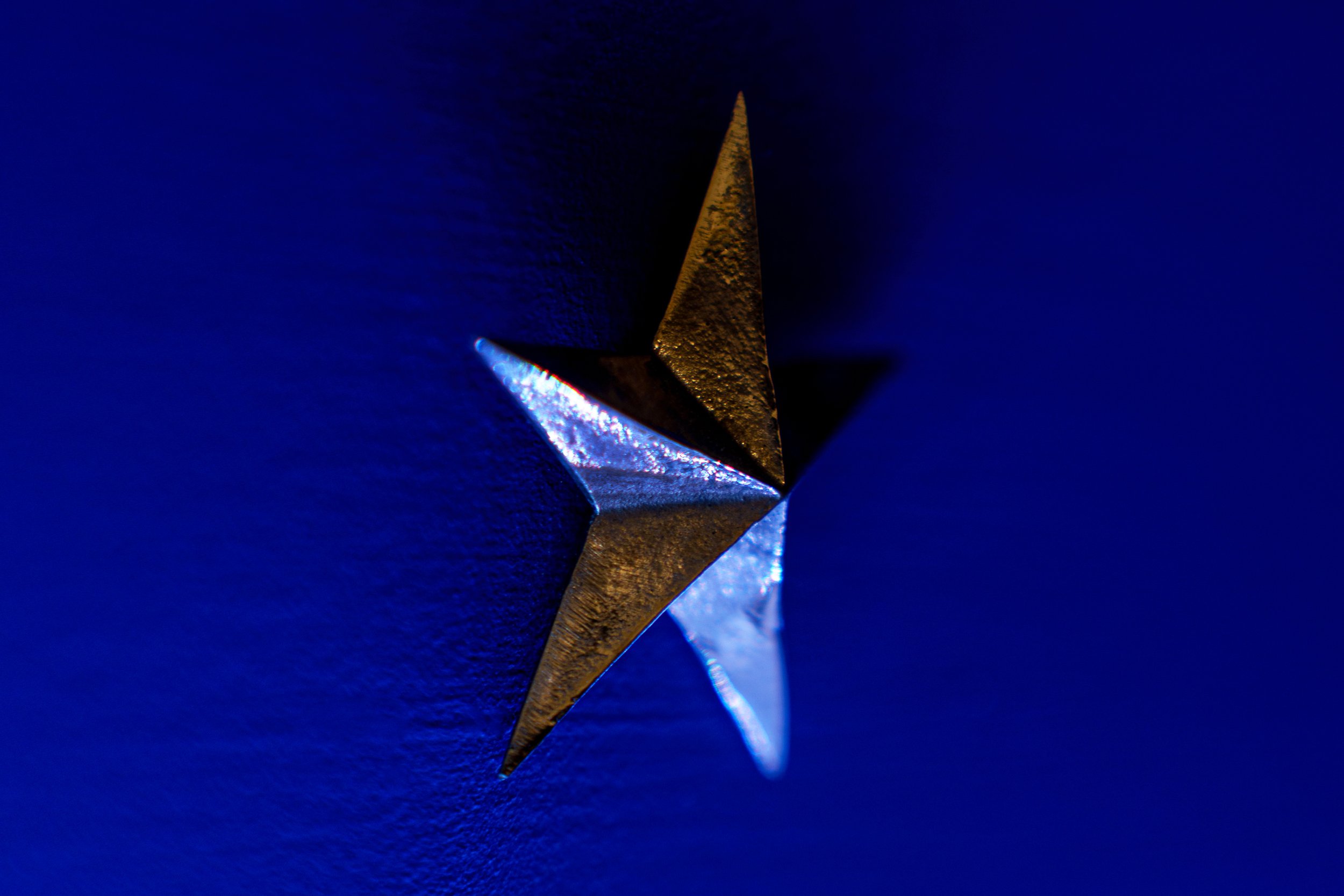
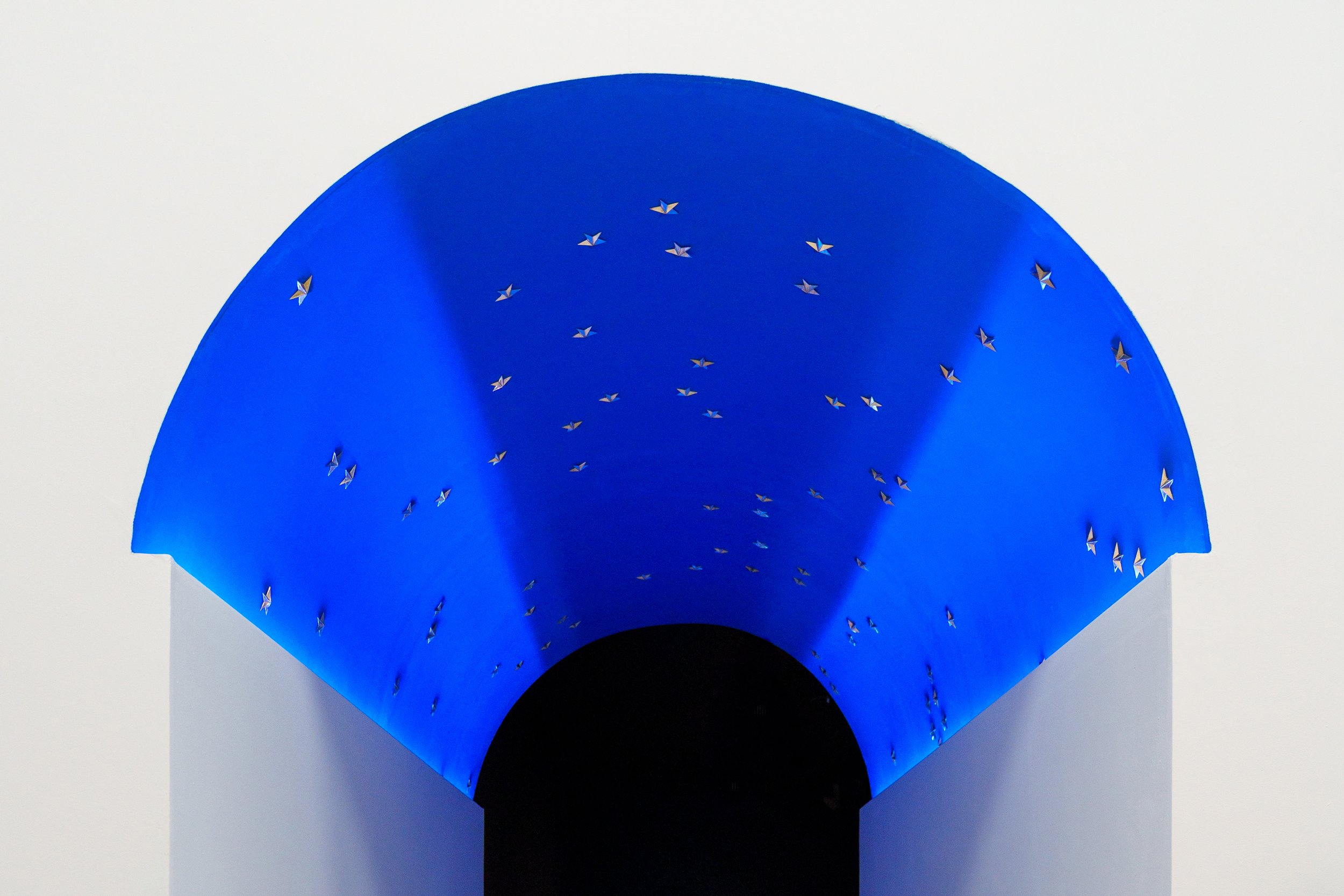
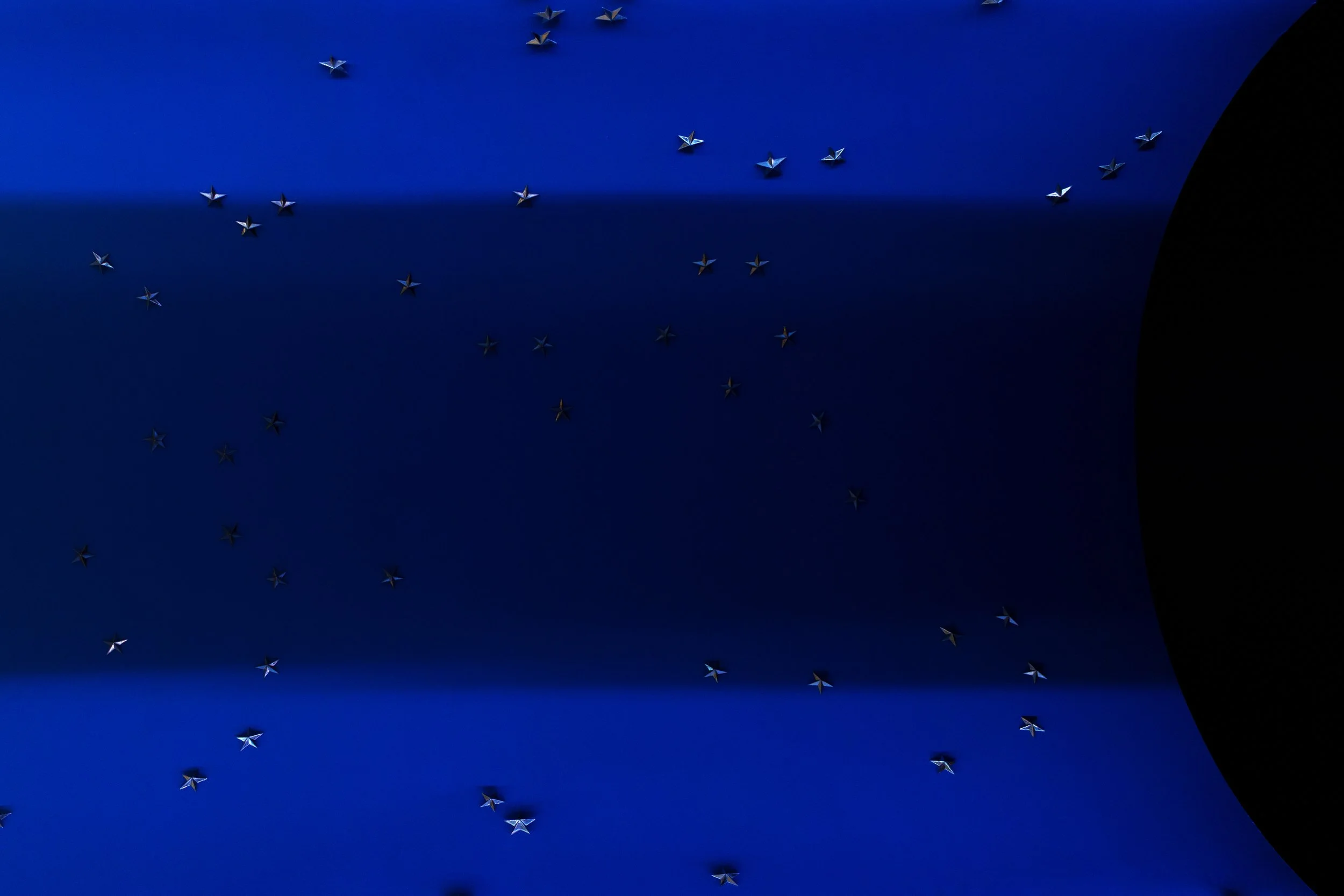
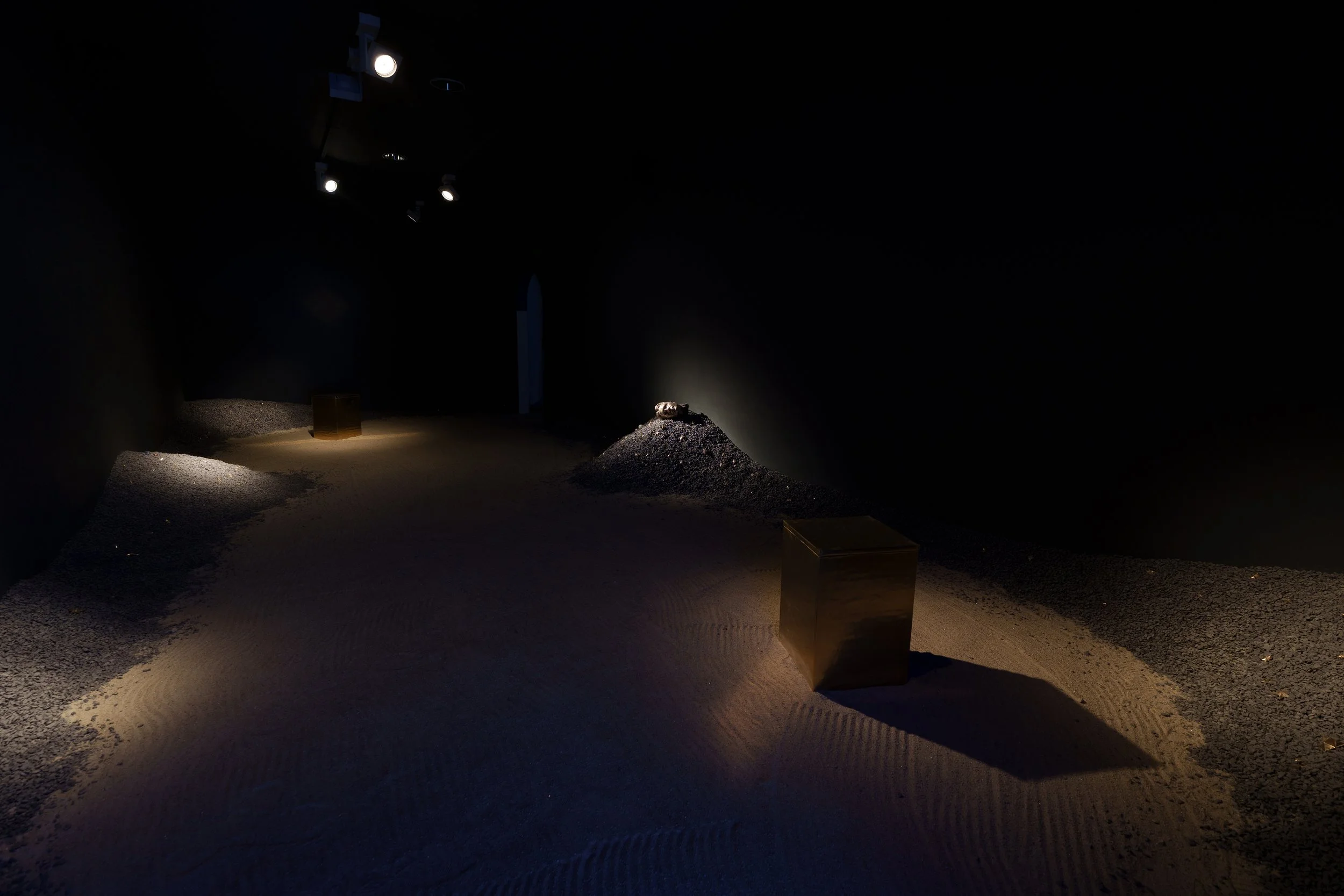
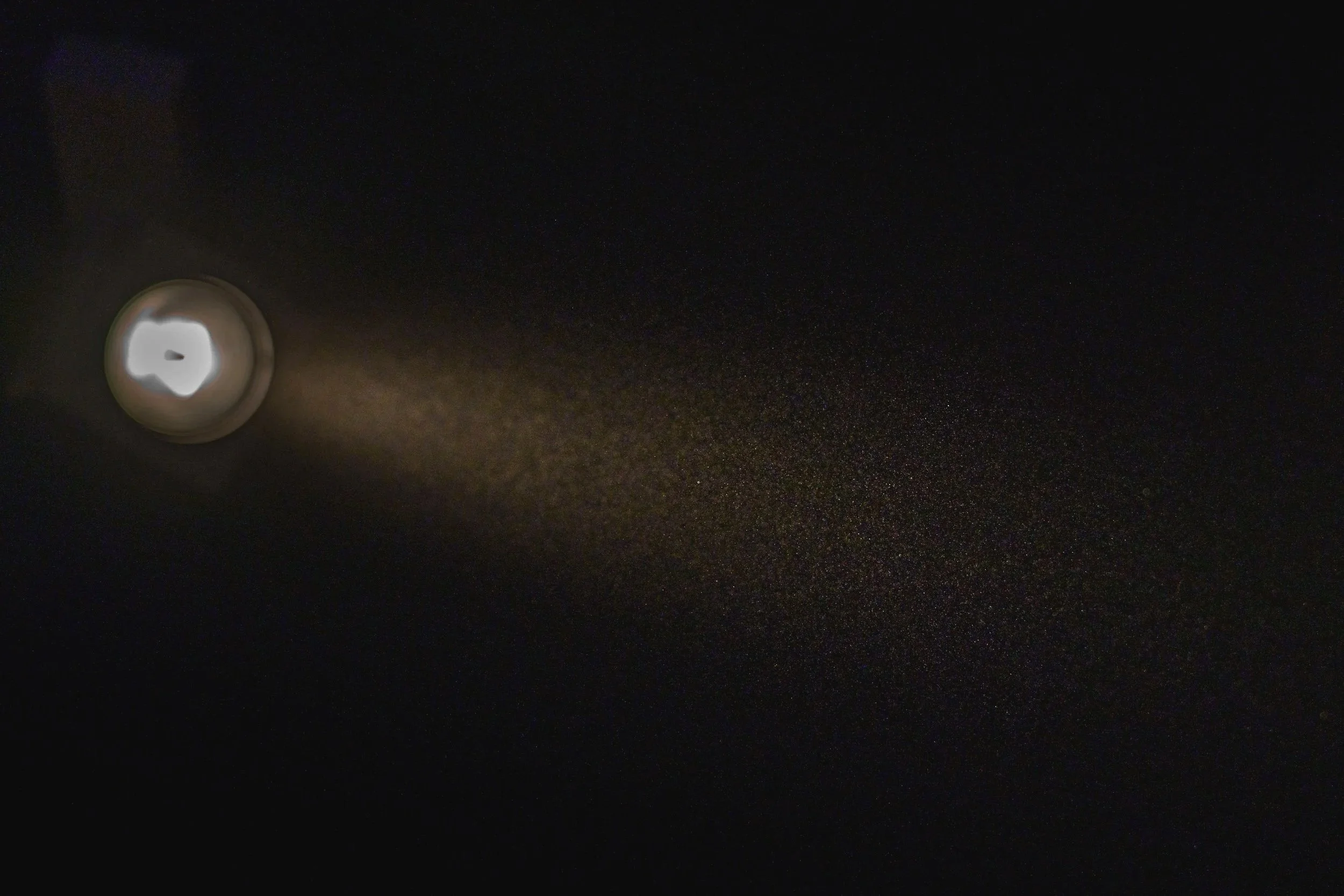
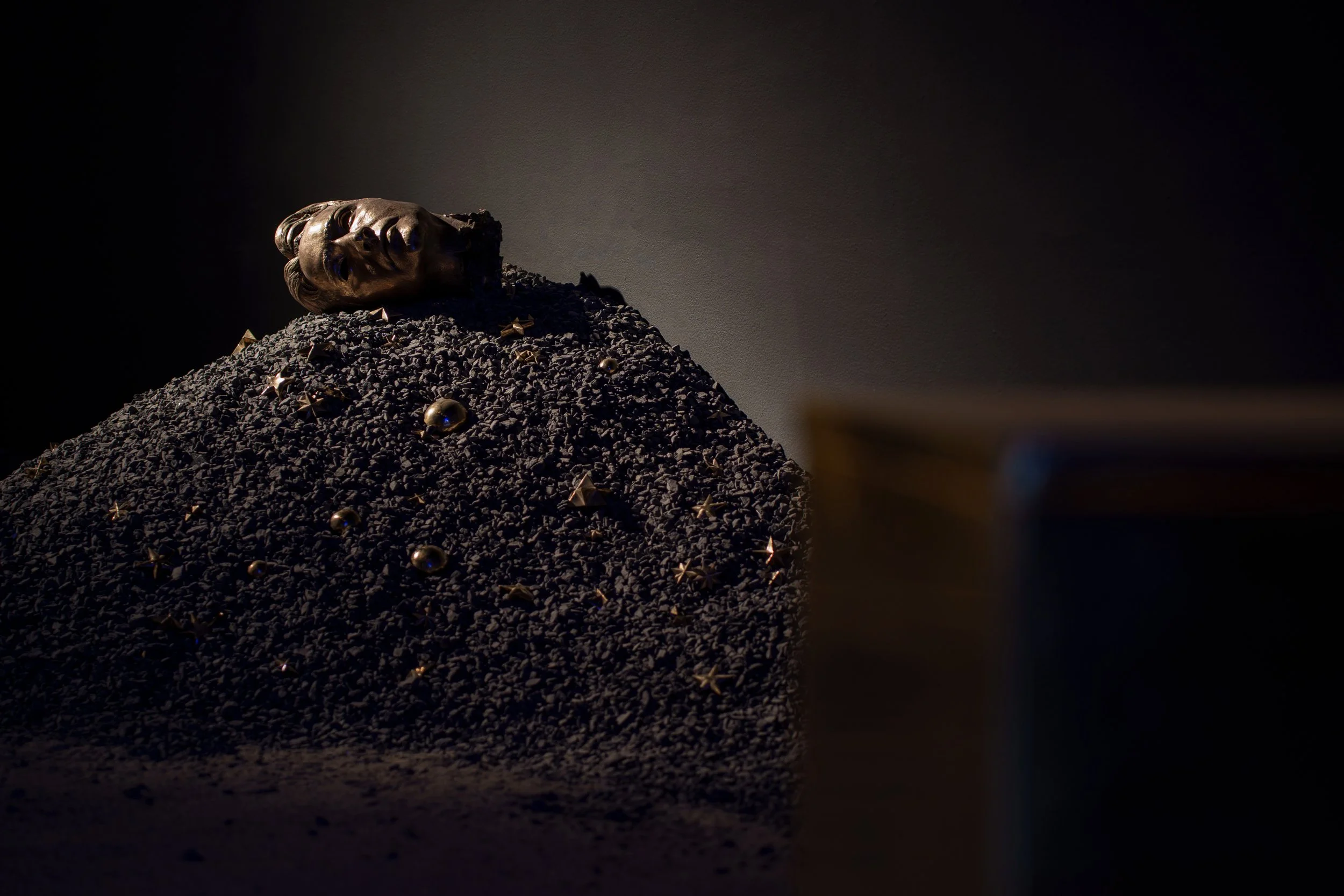
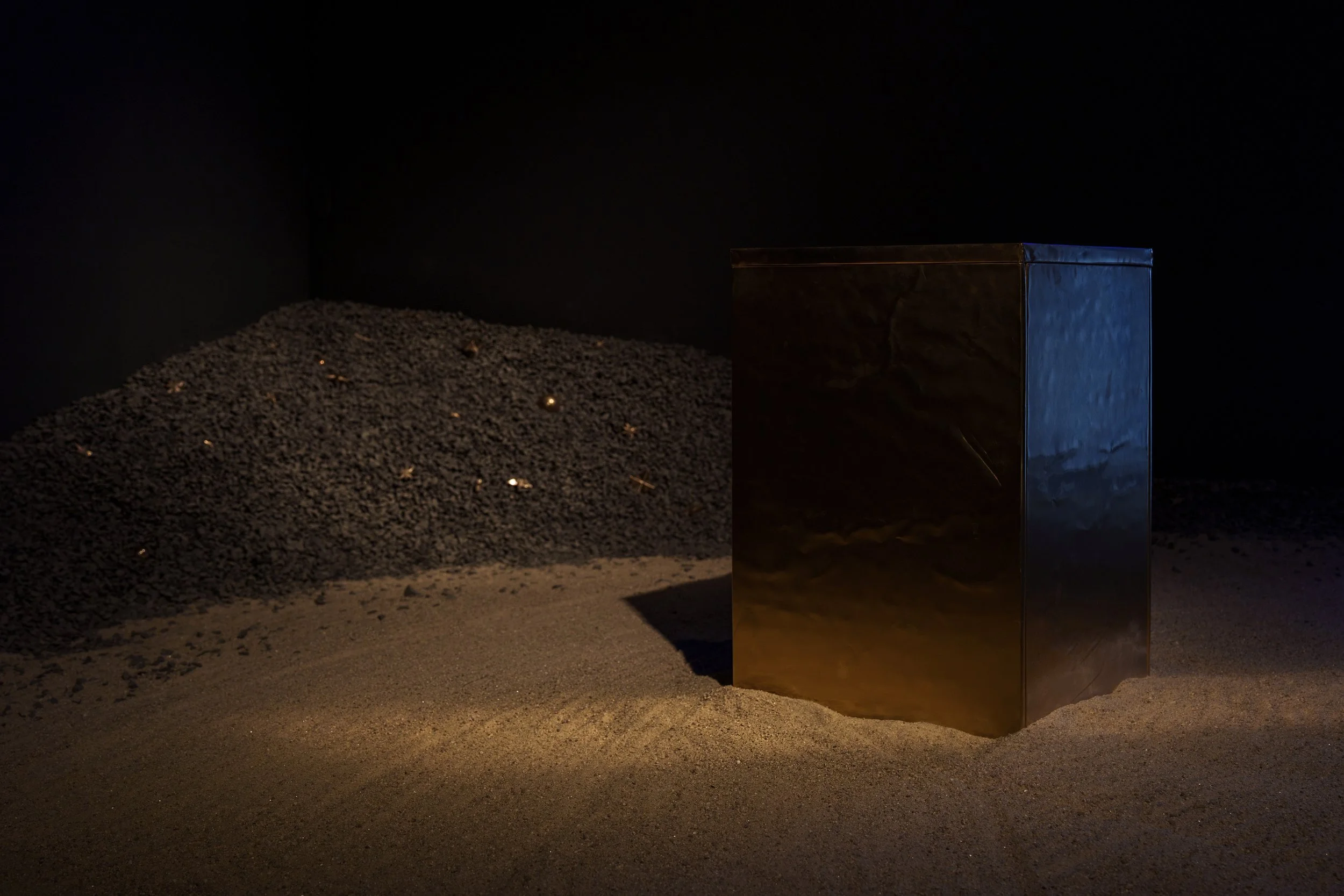
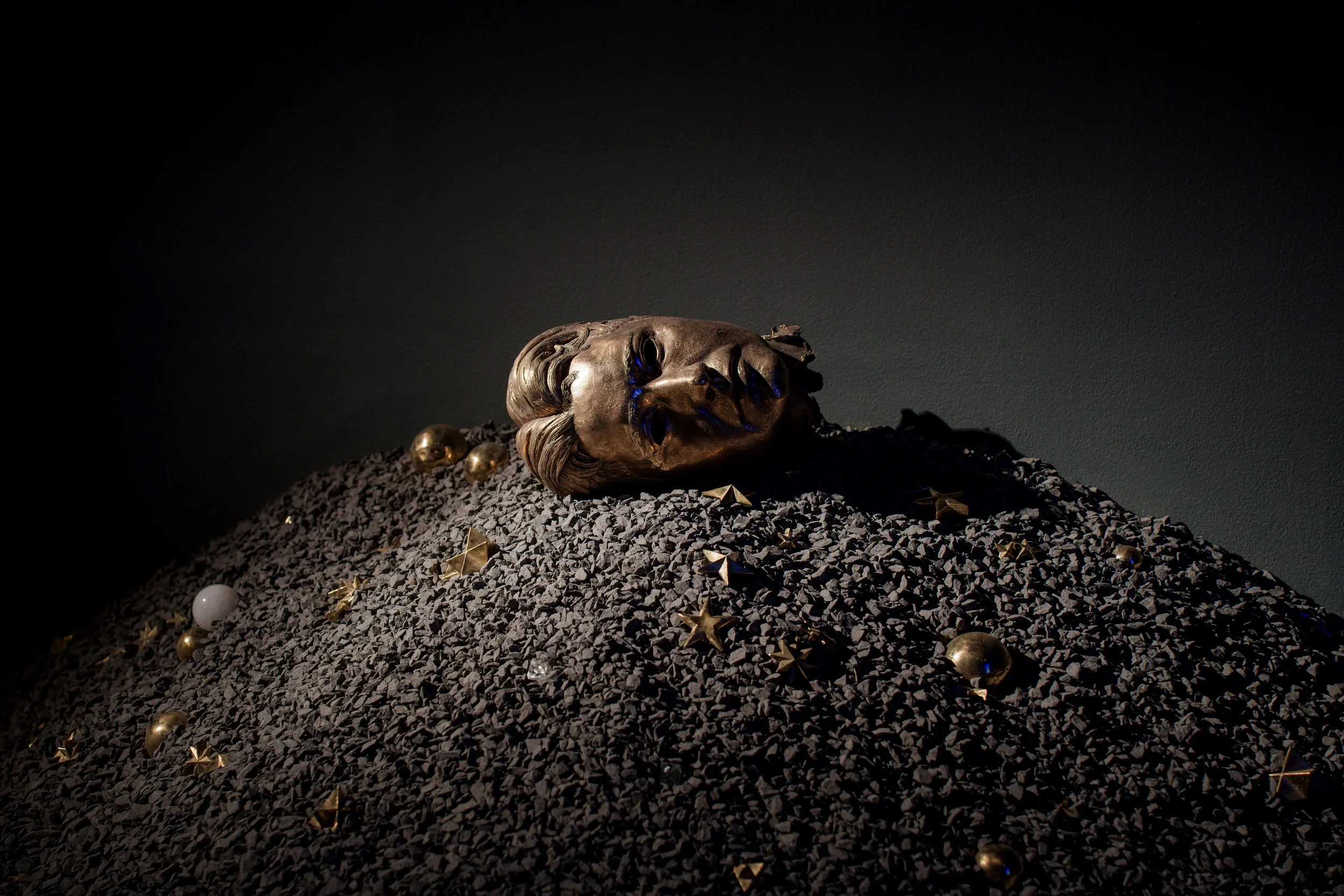
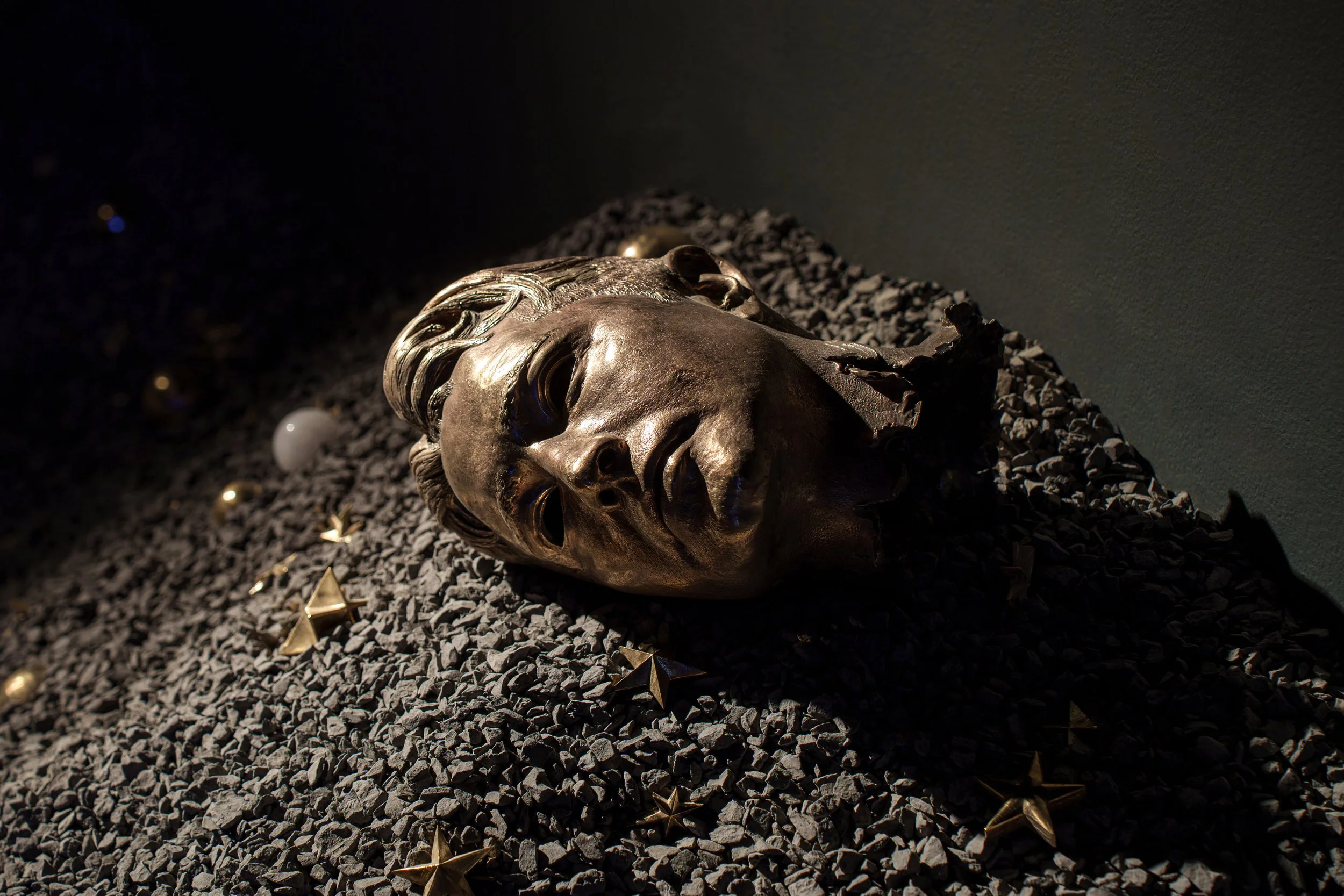
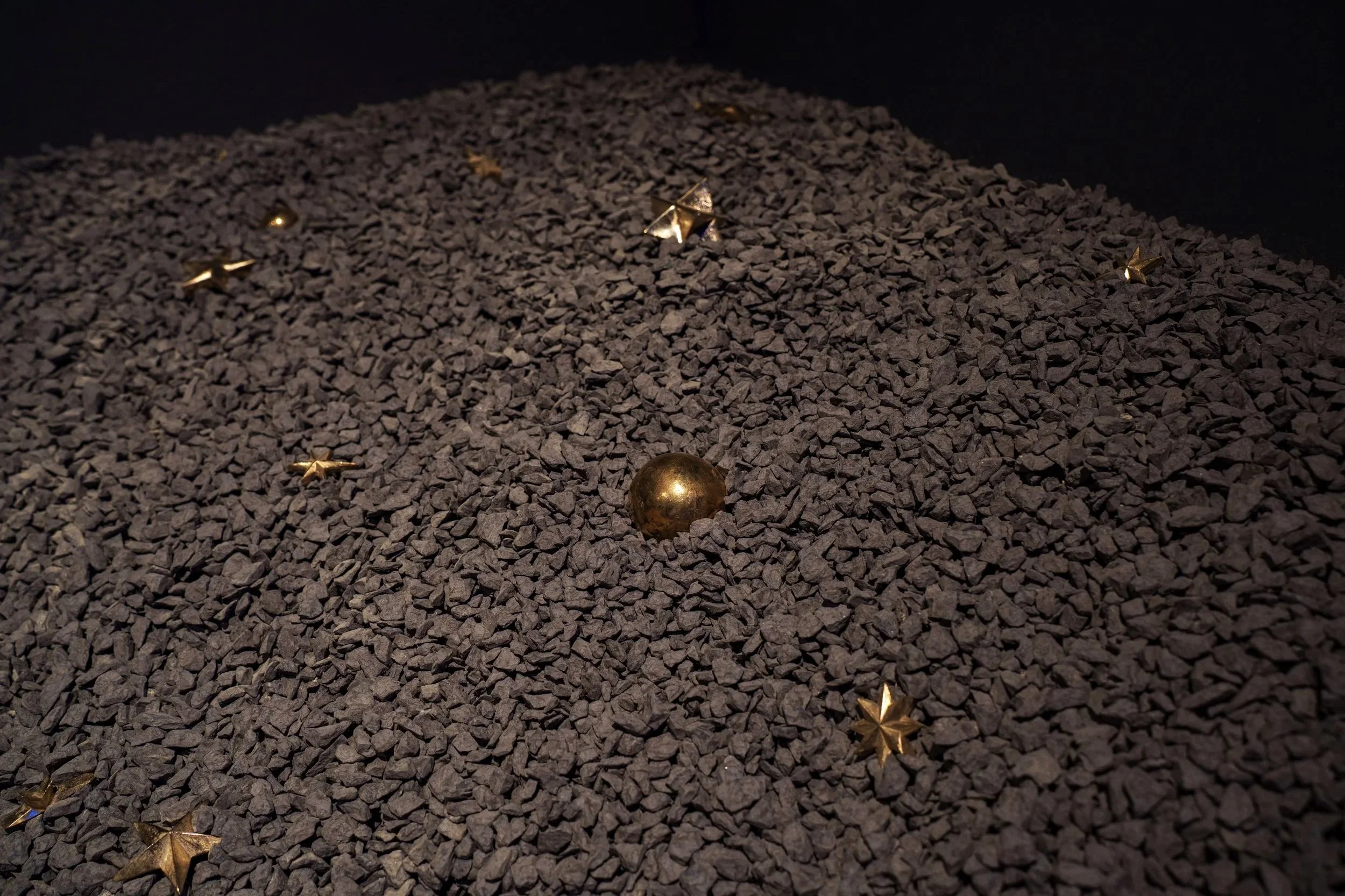
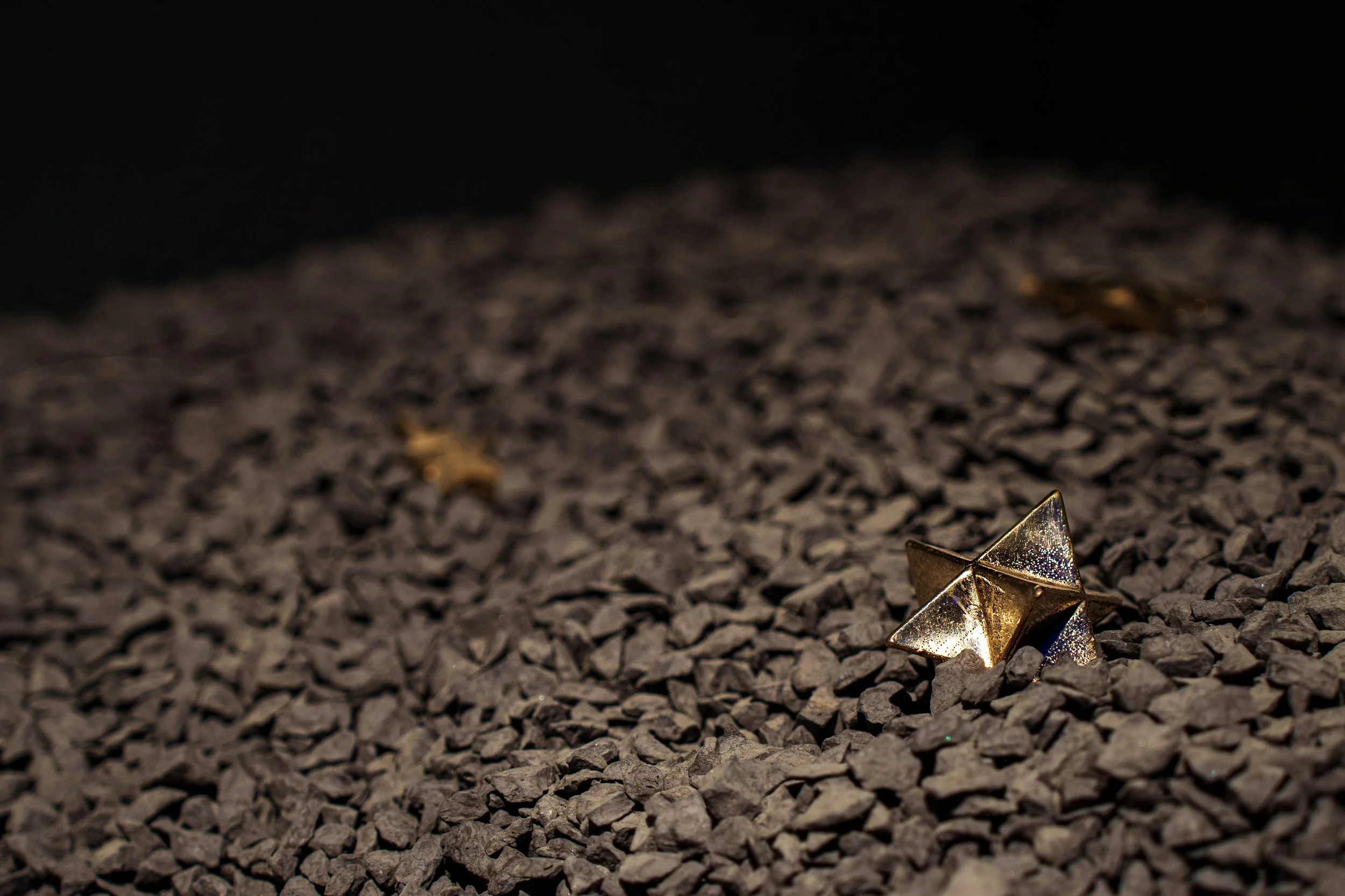
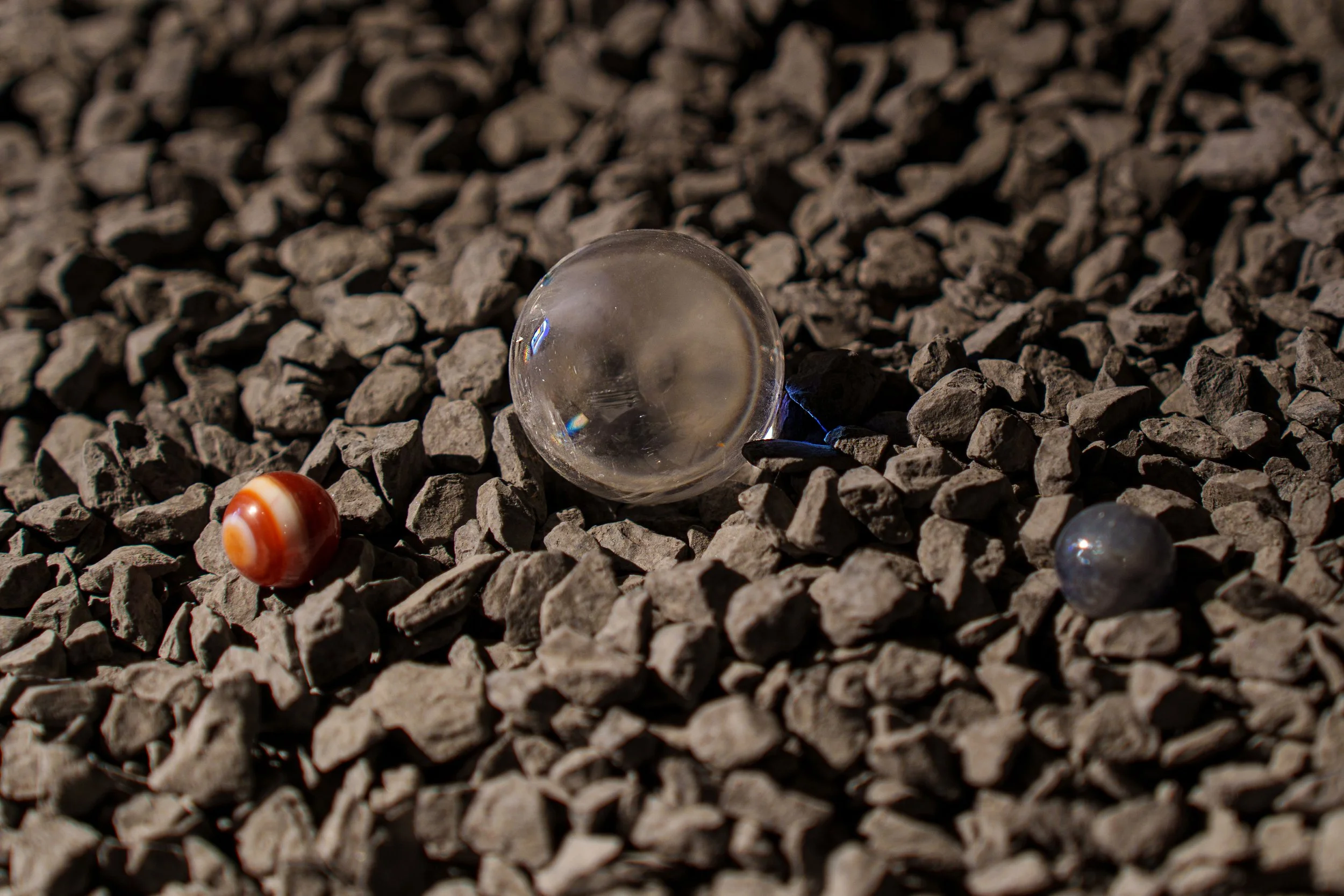
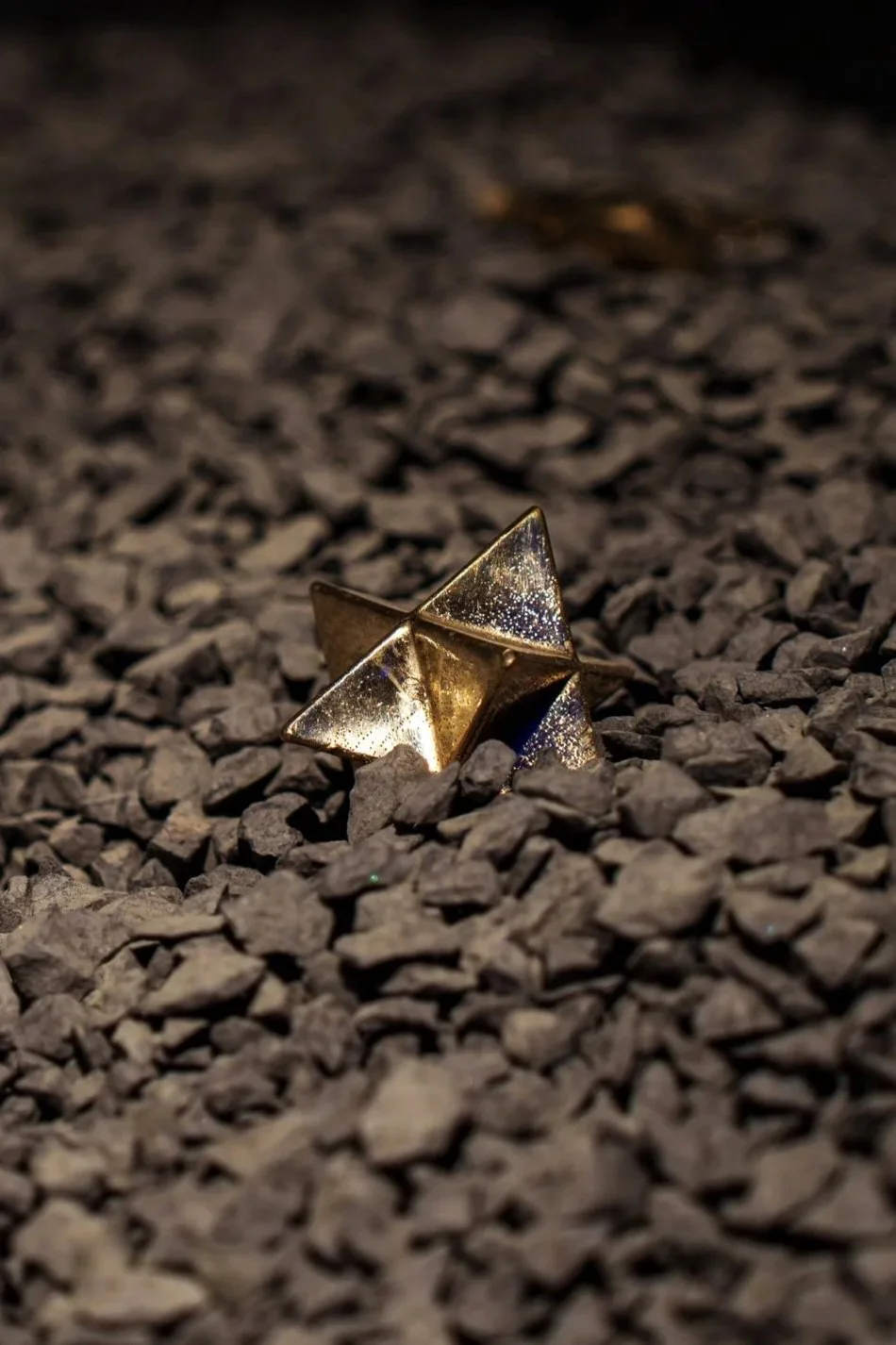
Bronze, sand, gravel, crystals, and a 23-minute durational audio piece. Dimensions vary. 2025.
All photos by Serhii Shapoval.
Voice acting by Gabriel Adewusi.
Audio production by Bobby Aherne.
Left behind from when stars collide, the gallery is now a transitional space, altered for just a while.
A tunnel leads you,
and a voice holds you within.
When Stars Collide is a multimedia installation that reshapes the gallery floor with paths of sand and heaps of gravel, where an array of fallen stars and a decapitated bronze head reside. The head becomes both relic and narrator, voicing its dilemmas and contemplations: the embodiment of the night sky, recalled fragments of memory, inherited beliefs, the body it lost, its disappointments, and its hope, all while waiting… waiting for what comes next. Drifting between analysis and poetry, the head loops back and forth, reflecting upon the spectrum of existence within the space and time it currently occupies.
Together with its company of abstracted stars, the bronze objects resist with their density the intangibility of what they signify, attempting to unify the ephemerality of the macrocosm with grounded, weighty matter.
Visitors are invited into this suspended landscape, where matter, memory, and meaning collide, and where uncertainty and awe linger.
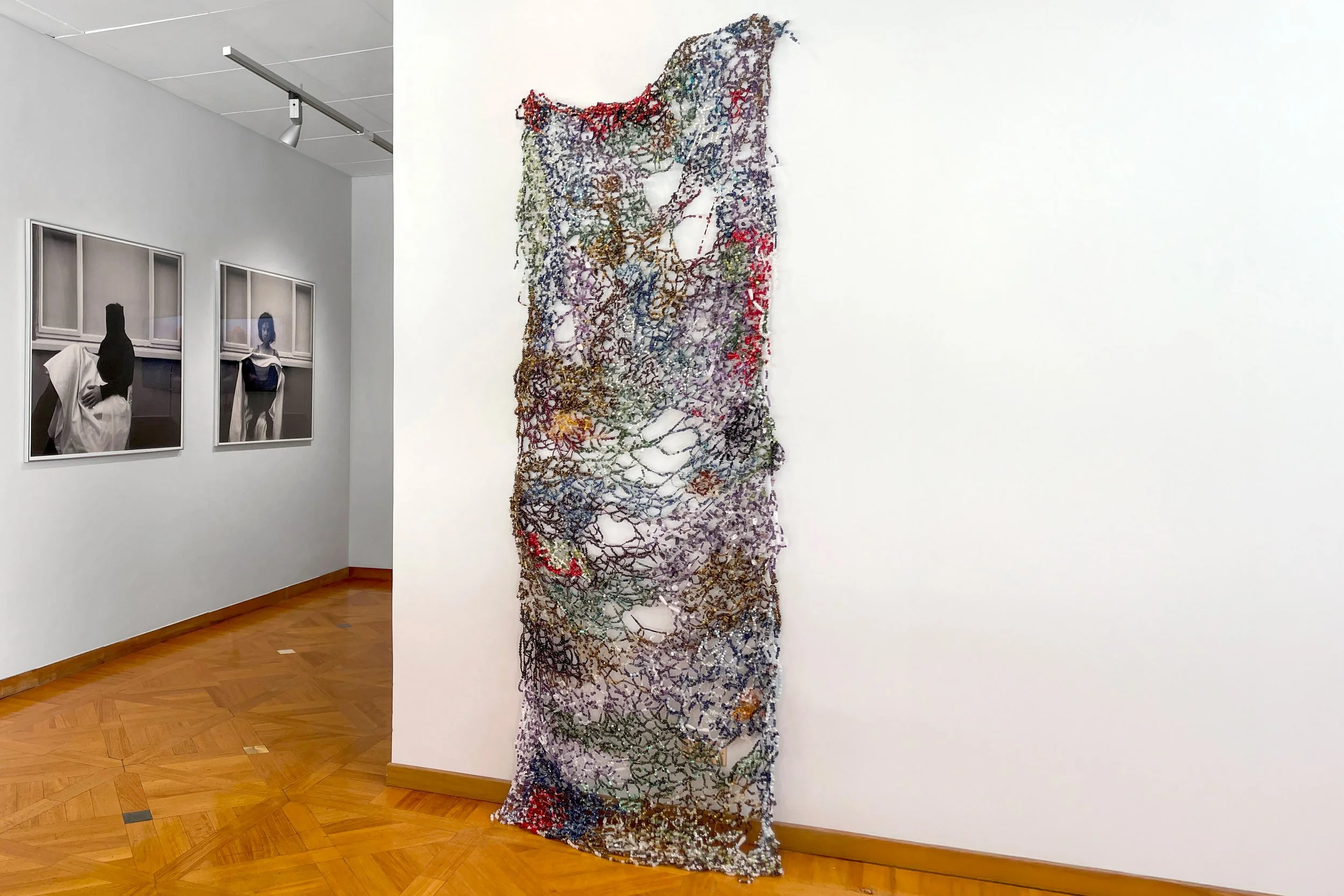
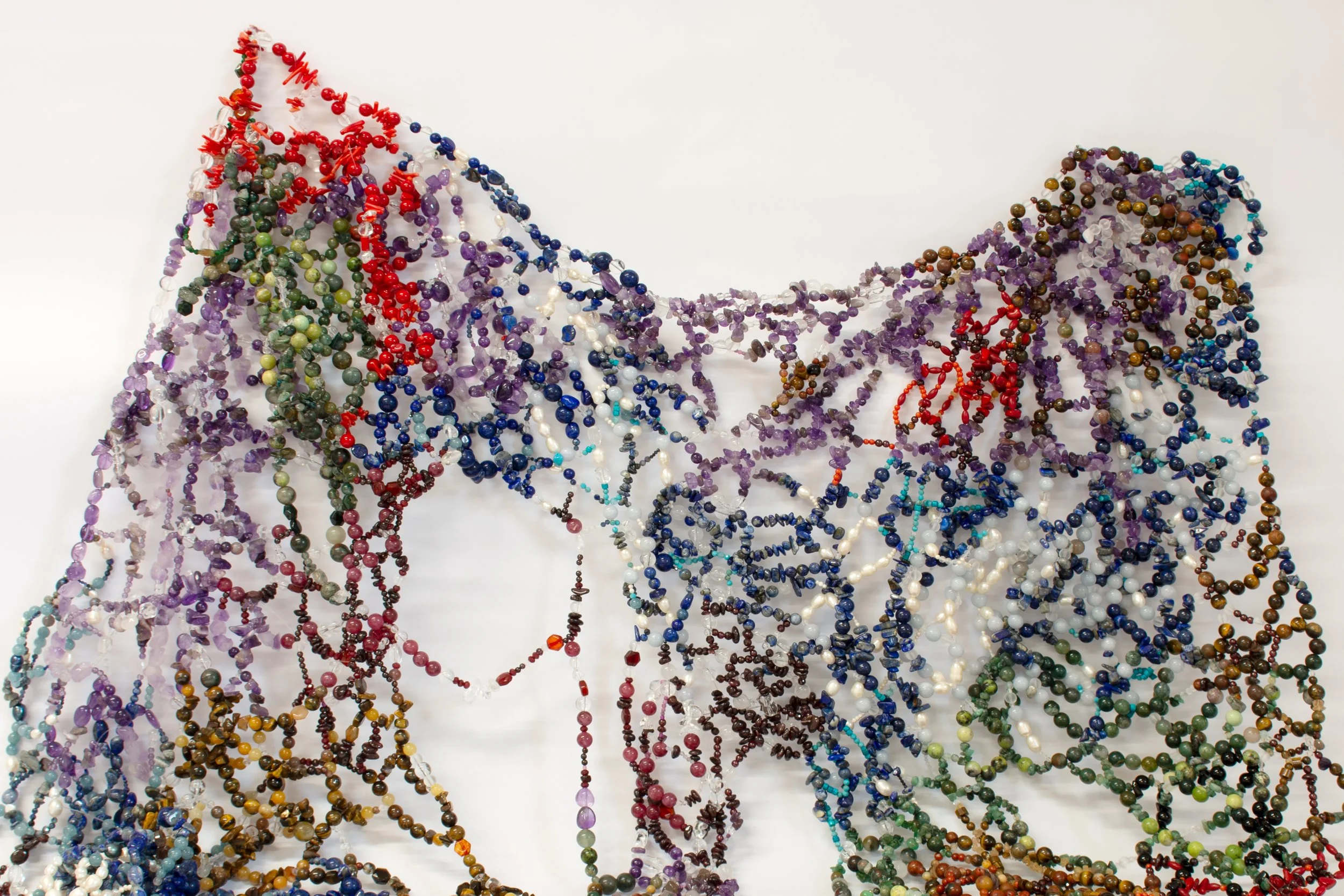
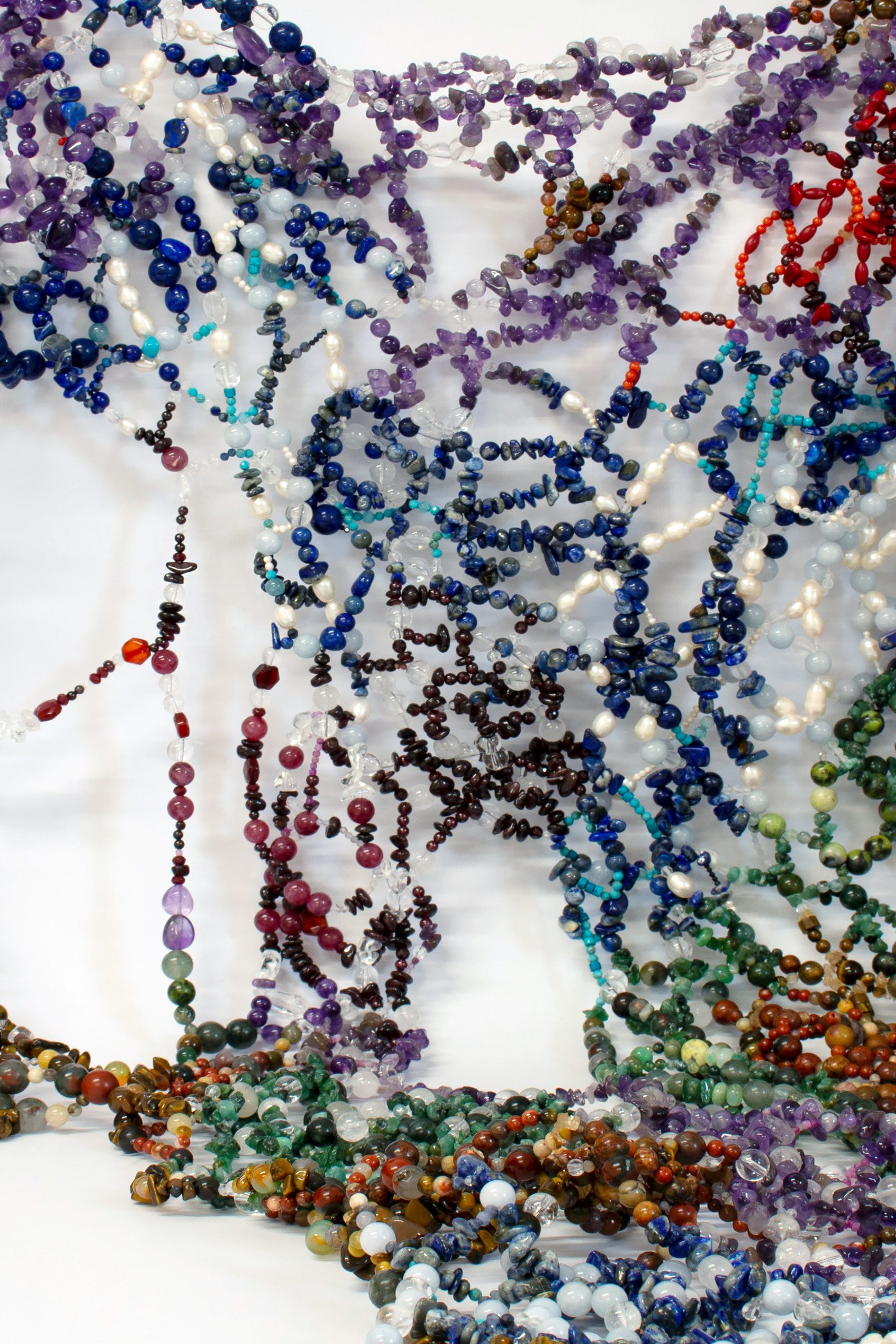
Amethyst, Bloodstone, Blue Sapphire, Chalcedony, Chrysoprase, Coral, Diamond, Emerald, Garnet, Indian Agate, Jade, Jasper, Lapis Lazuli, Onyx, Pearl, Quartz, Ruby, Sardonyx, Tigers Eye, Turquoise, Yellow Sapphire, Yellow Topaz, and transparent wire. Approximately 100 x 3 x 200 cm. 2025.
The Shroud of Contemporary Healing is made from gemstone beads and chips woven together. The list of gemstones was informed by Ayurvedic traditions in India and Physica (c. 1158), written by Saint Hildegard, the only Catholic saint who advocated crystal healing. Crystal healing was the first external belief introduced to me as a child. A family member gifted me a piece of lapis lazuli to combat recurring tonsillitis, with the simple instruction to press it against my neck to promote healing. The Shroud of Contemporary Healing was also informed by the Shroud of Turin in Italy, speculated to be the shroud that covered the body of Christ, and that can grant the miracle of healing by simply touching it.
Crystal healing has seen a resurgence in practice as a form of alternative medicine. Often, these “new age” practices are composed of a jumble of appropriated crystal healing traditions, with little reference to their historical legacy. The Shroud of Contemporary Healing examines the human urge to place faith upon objects, informed by the historic journeys of such rituals.
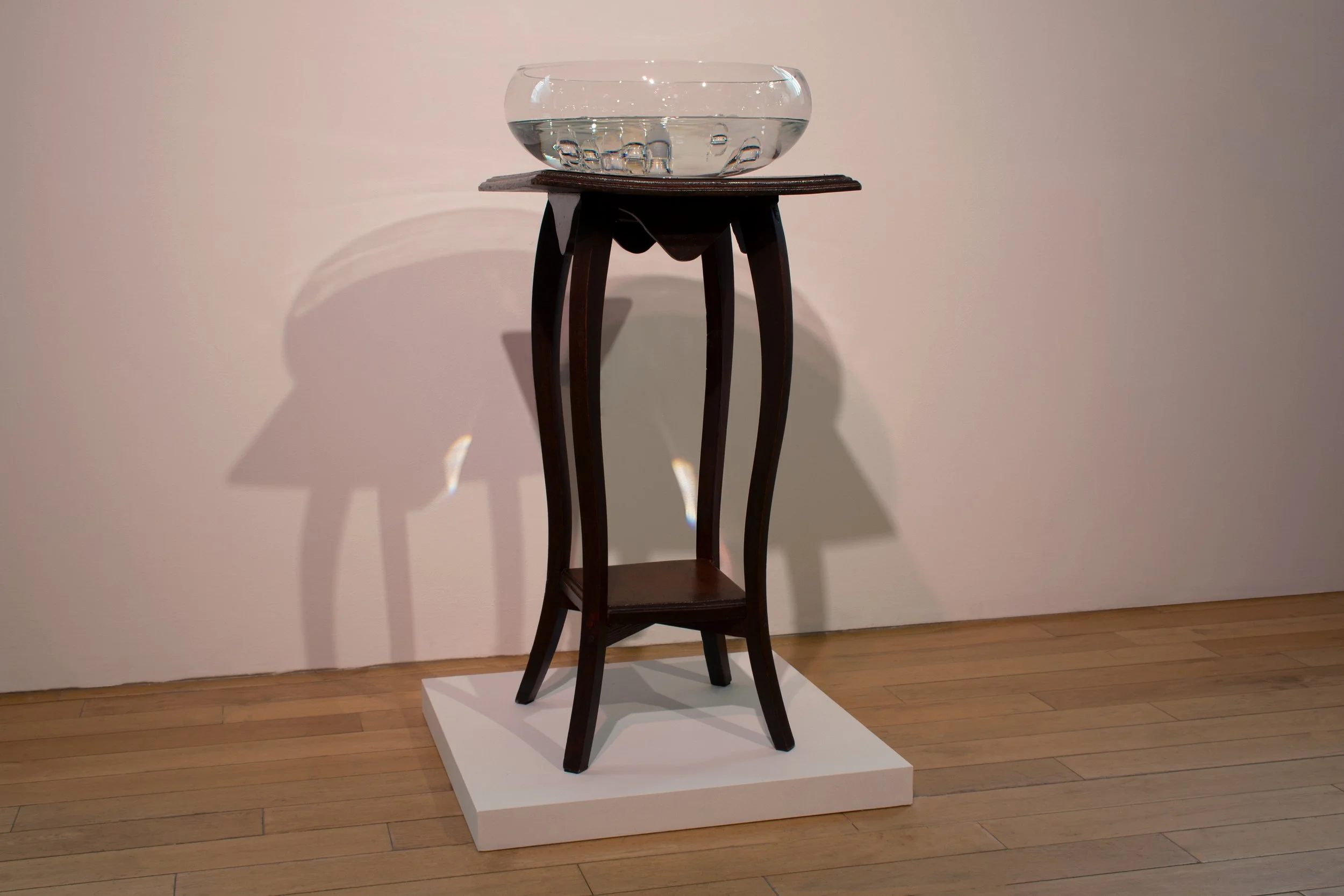
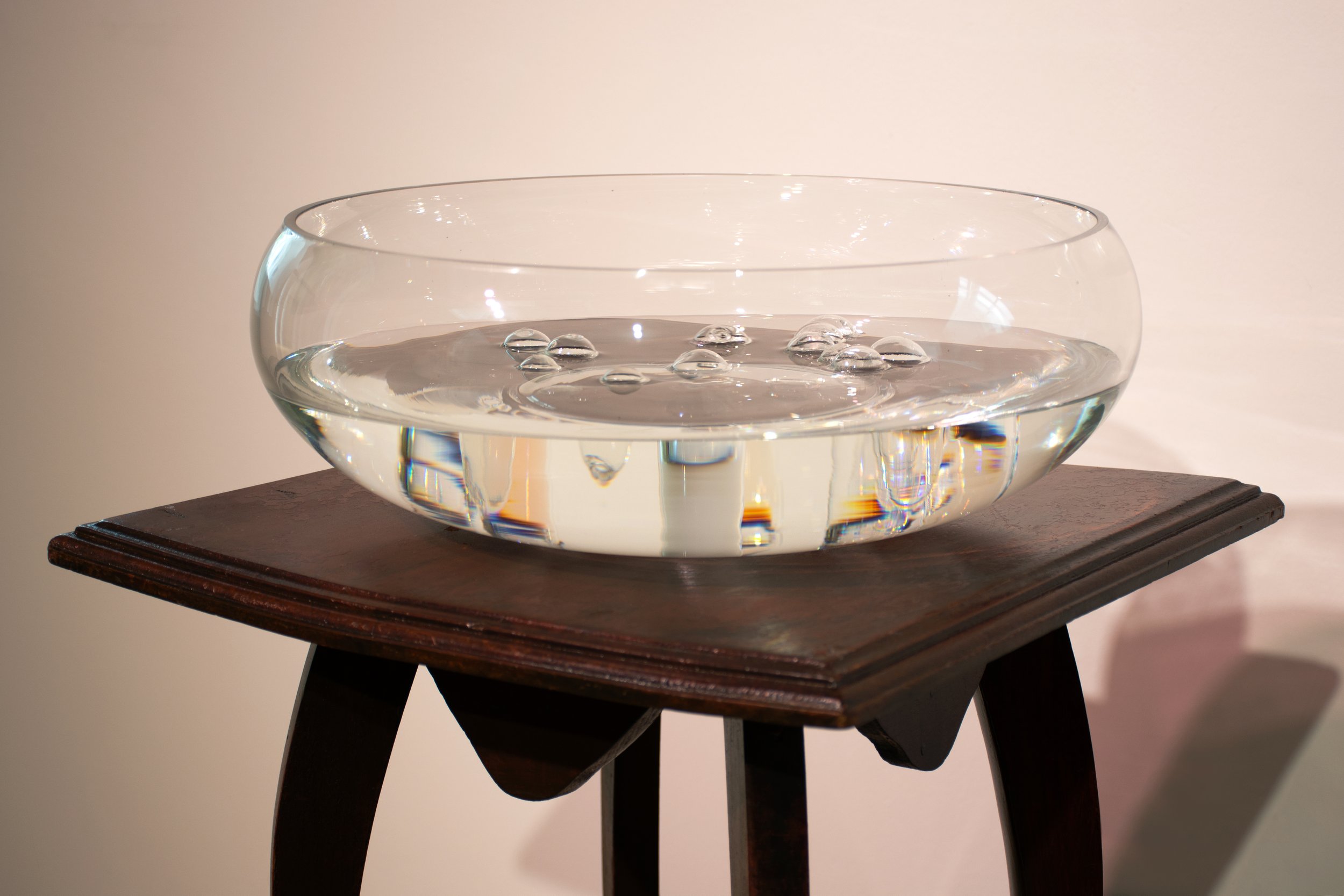
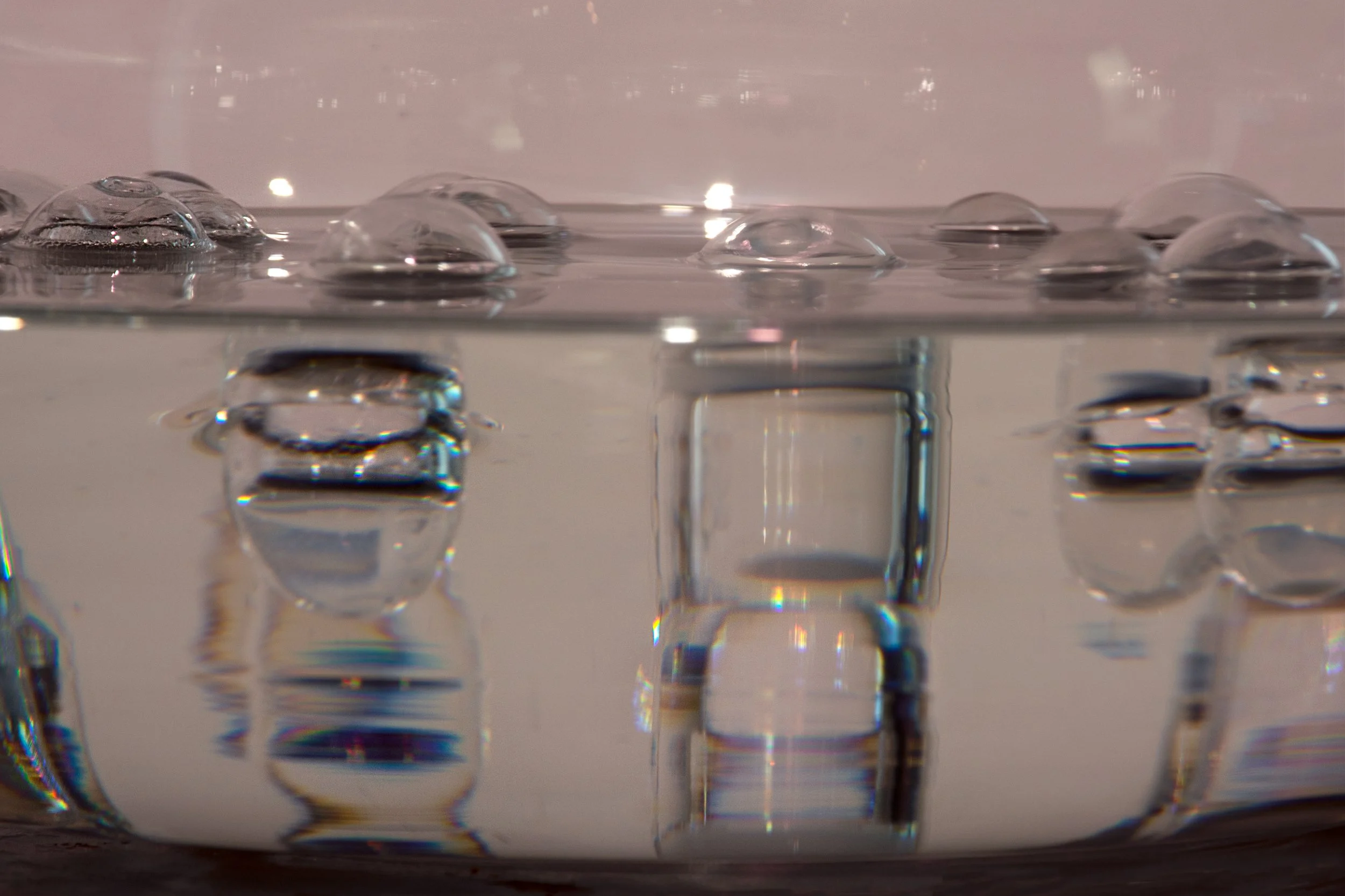
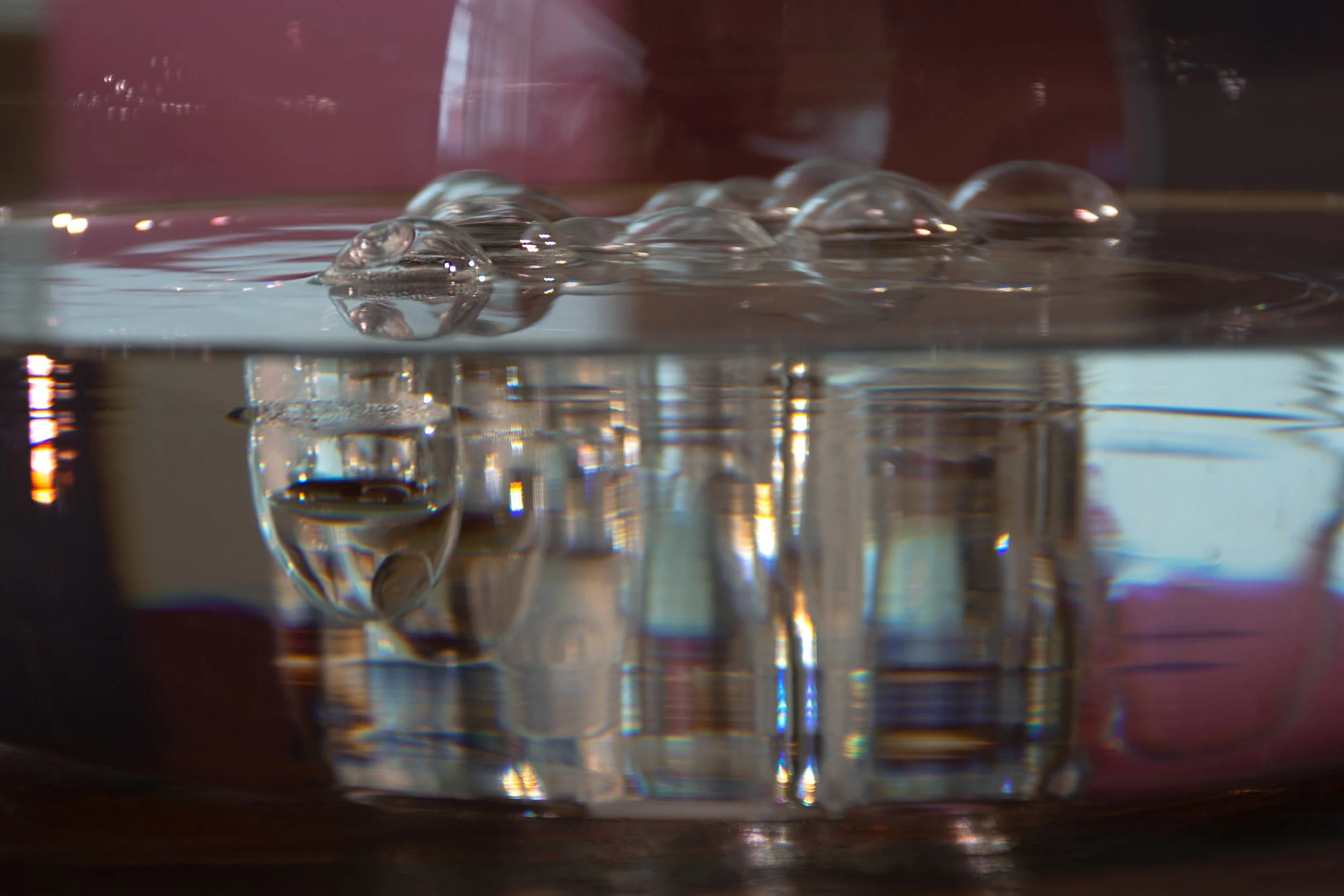
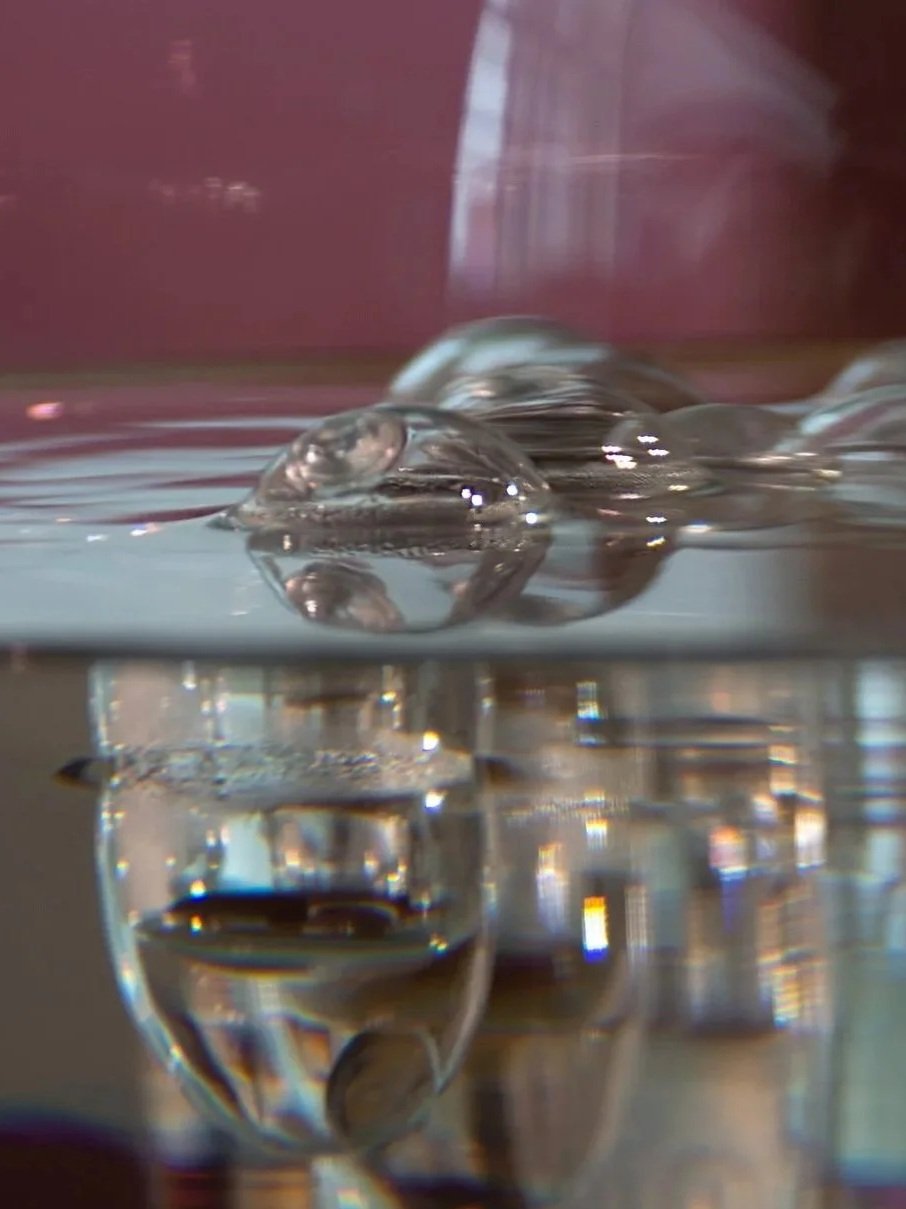
Side table, glass bowl, 12 glass spheres (varied diameters), resin, water, distilled water, oxytocin, serotonin, adrenaline, dopamine, norepinephrine, vasopressin, histamine, acetylcholine, estradiol, testosterone, semen, and saliva. 87 × 40 × 40 cm. 2023.
This Feels Right, Until… brings shared internal, often intangible sensations of attraction, love, lust, and attachment into a representative, quantifiable, and tangible state. The artwork plays with the definitions of “feeling” and the tensions between love as it is felt and love as a subject of analysis, accepting both simultaneously.
The experience of love is complex. When viewed through an analytical lens, these euphoric feelings can be translated into a dance between ten biochemicals and two bodily fluids:
Oxytocin, serotonin, adrenaline, dopamine, norepinephrine, vasopressin, histamine, acetylcholine, estradiol, testosterone, semen, and saliva.
They might feel otherworldly to us, yet they are central to our sense of ourselves and of others.
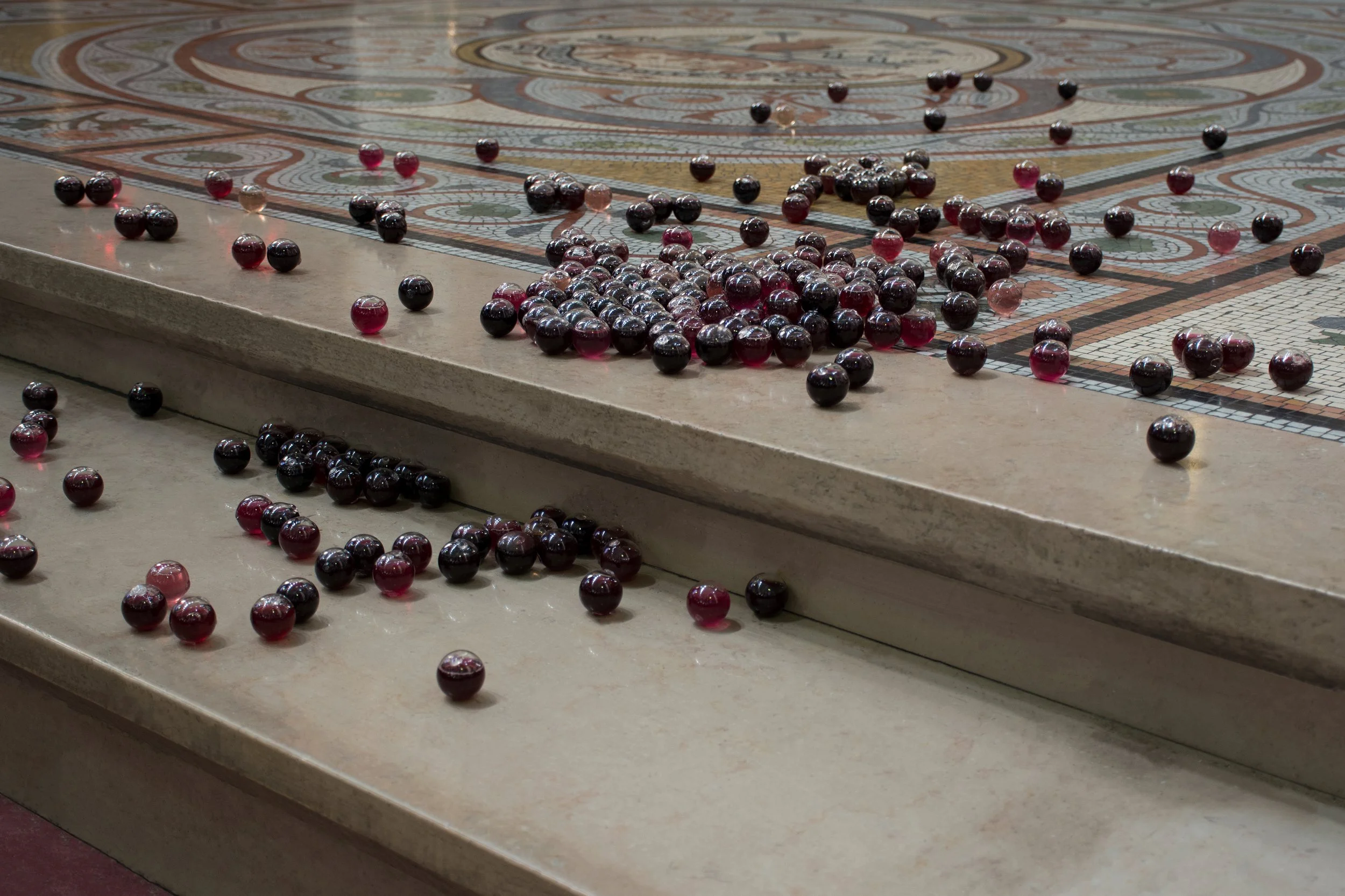
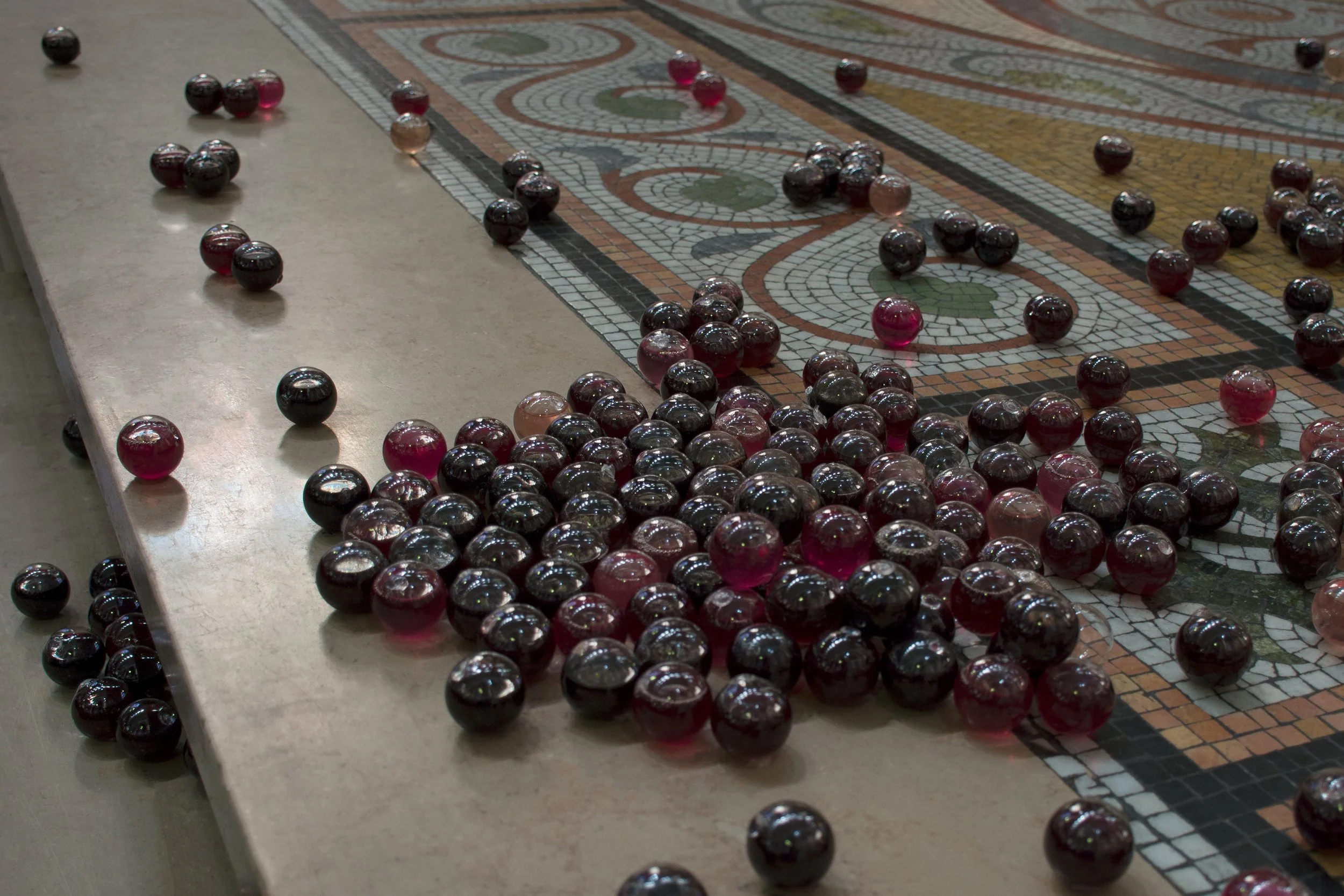
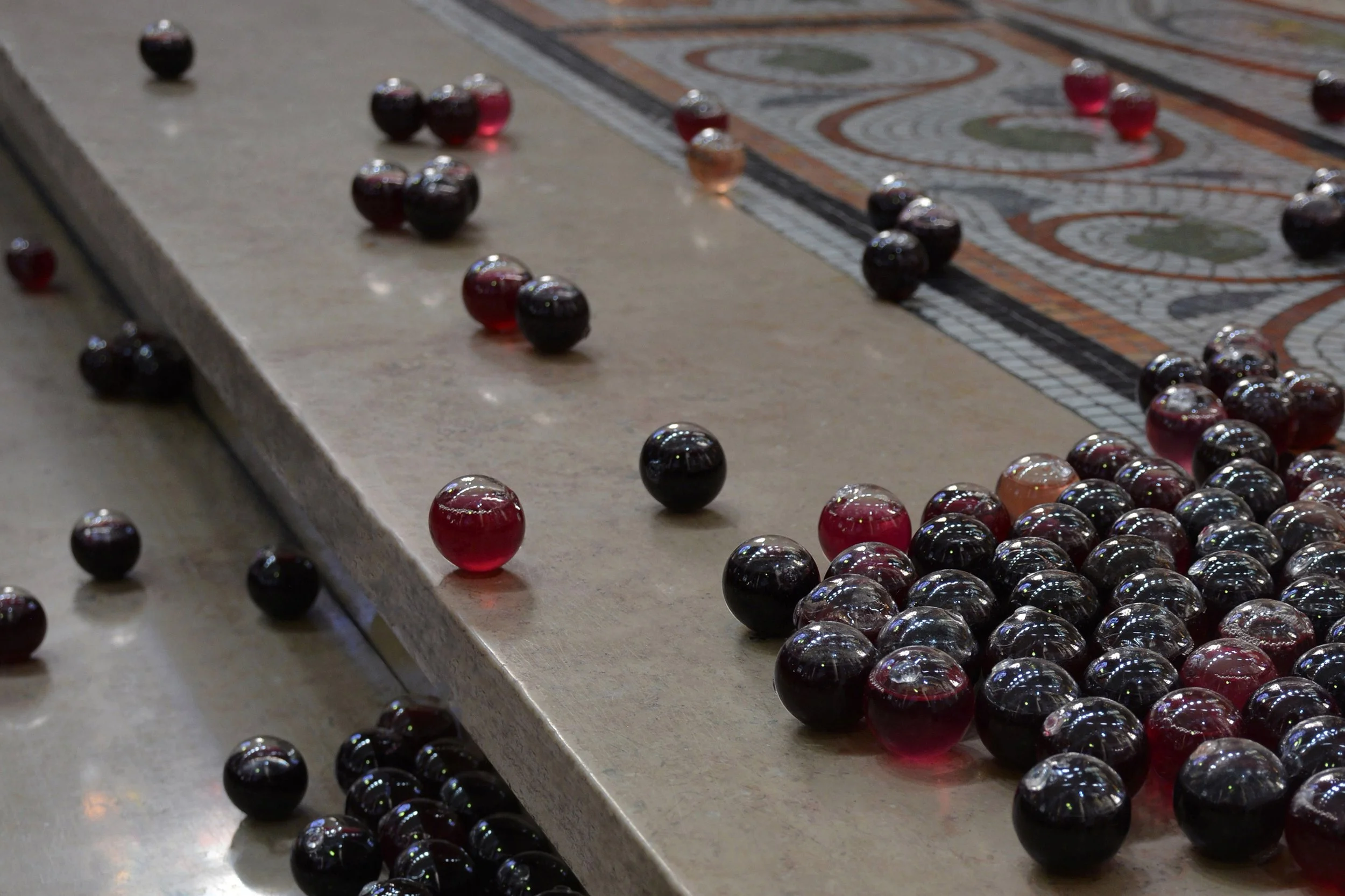
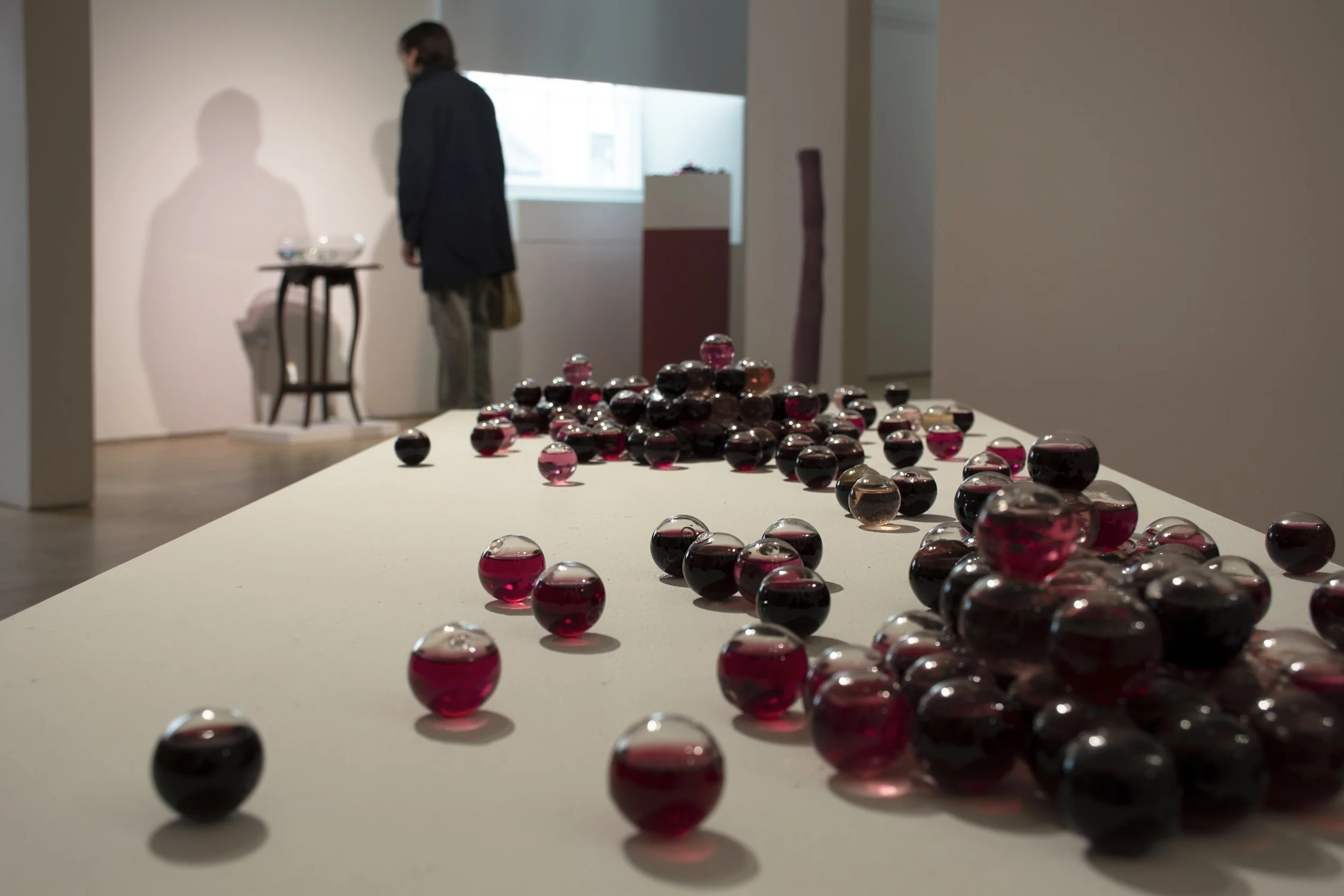
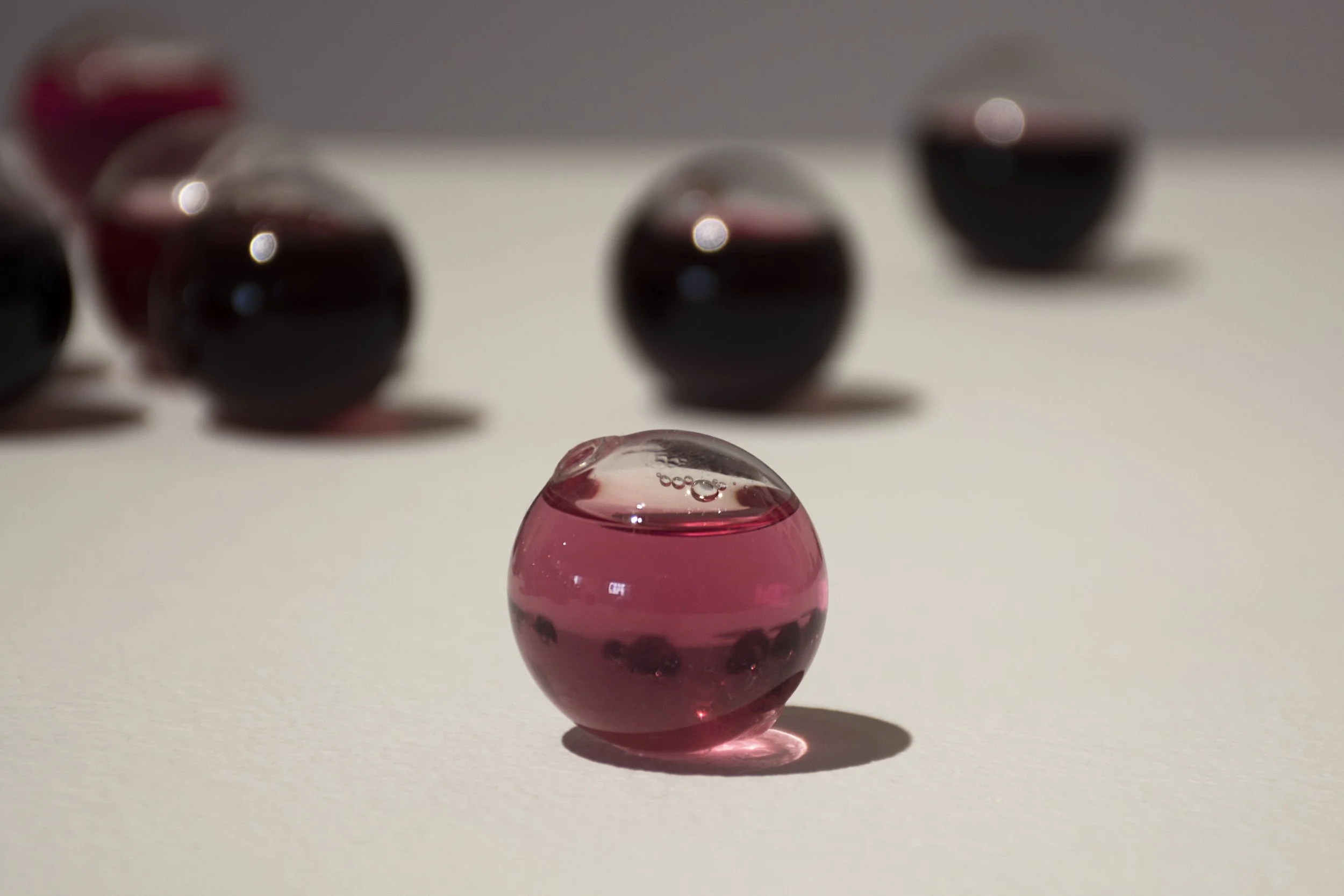
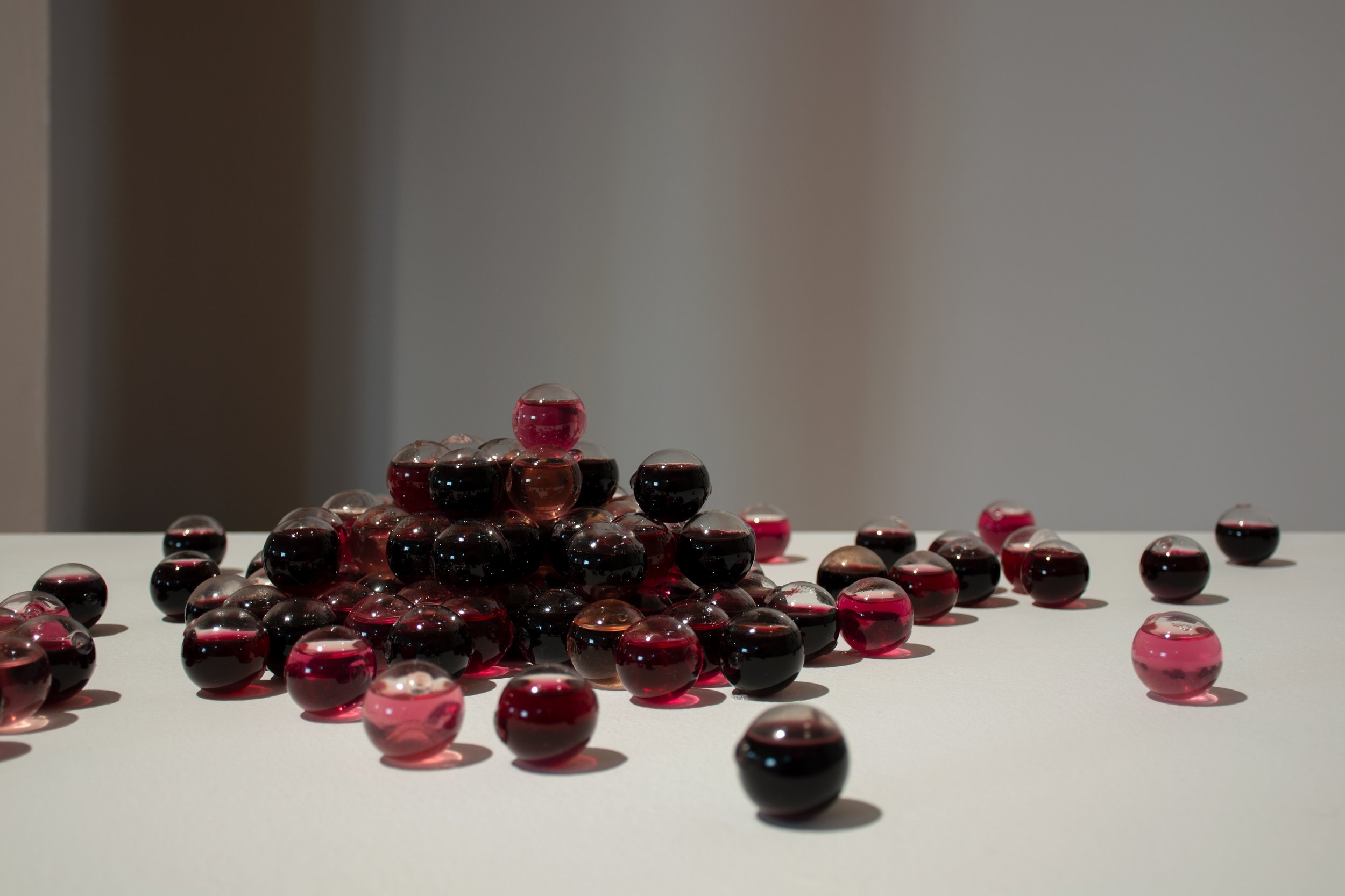
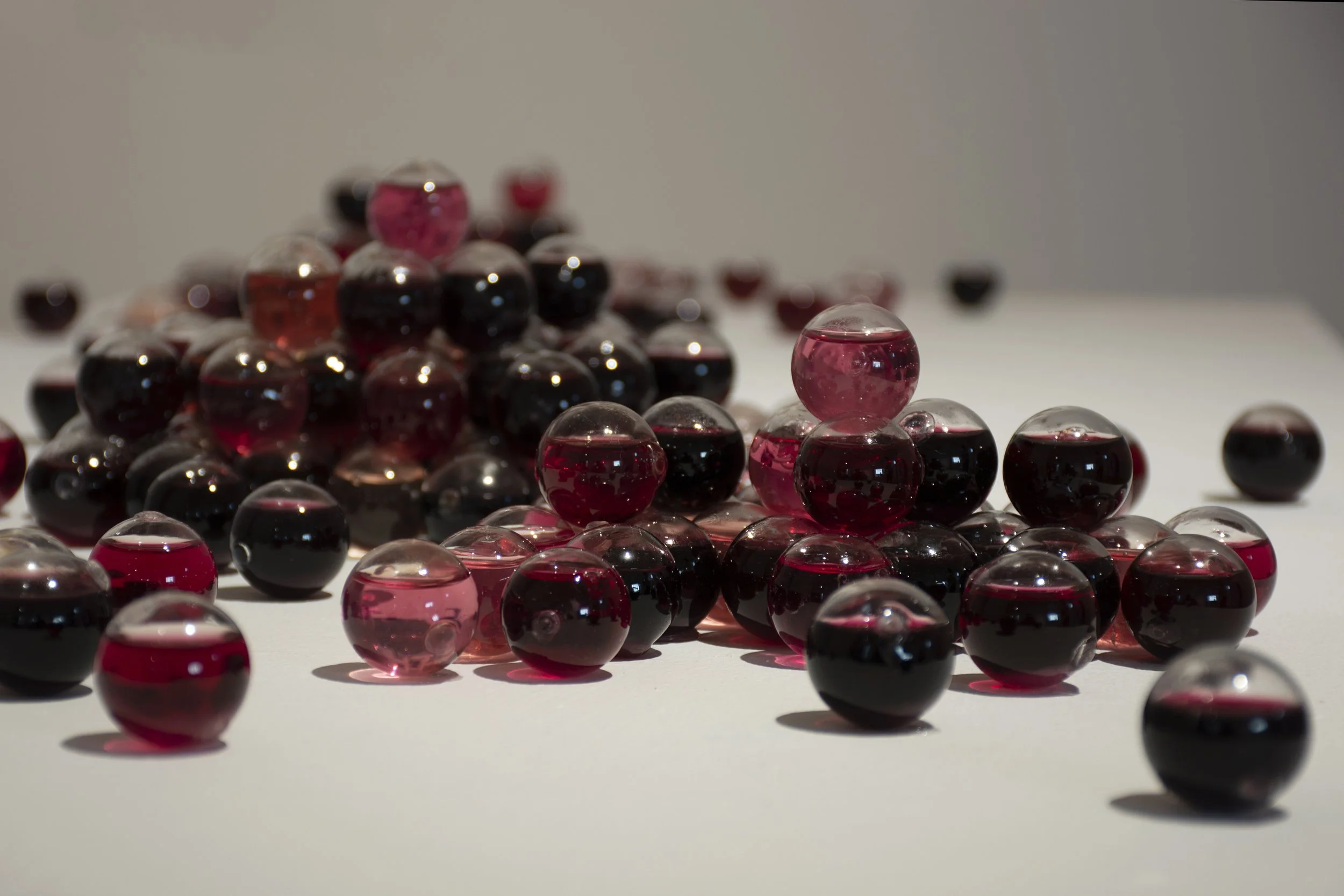
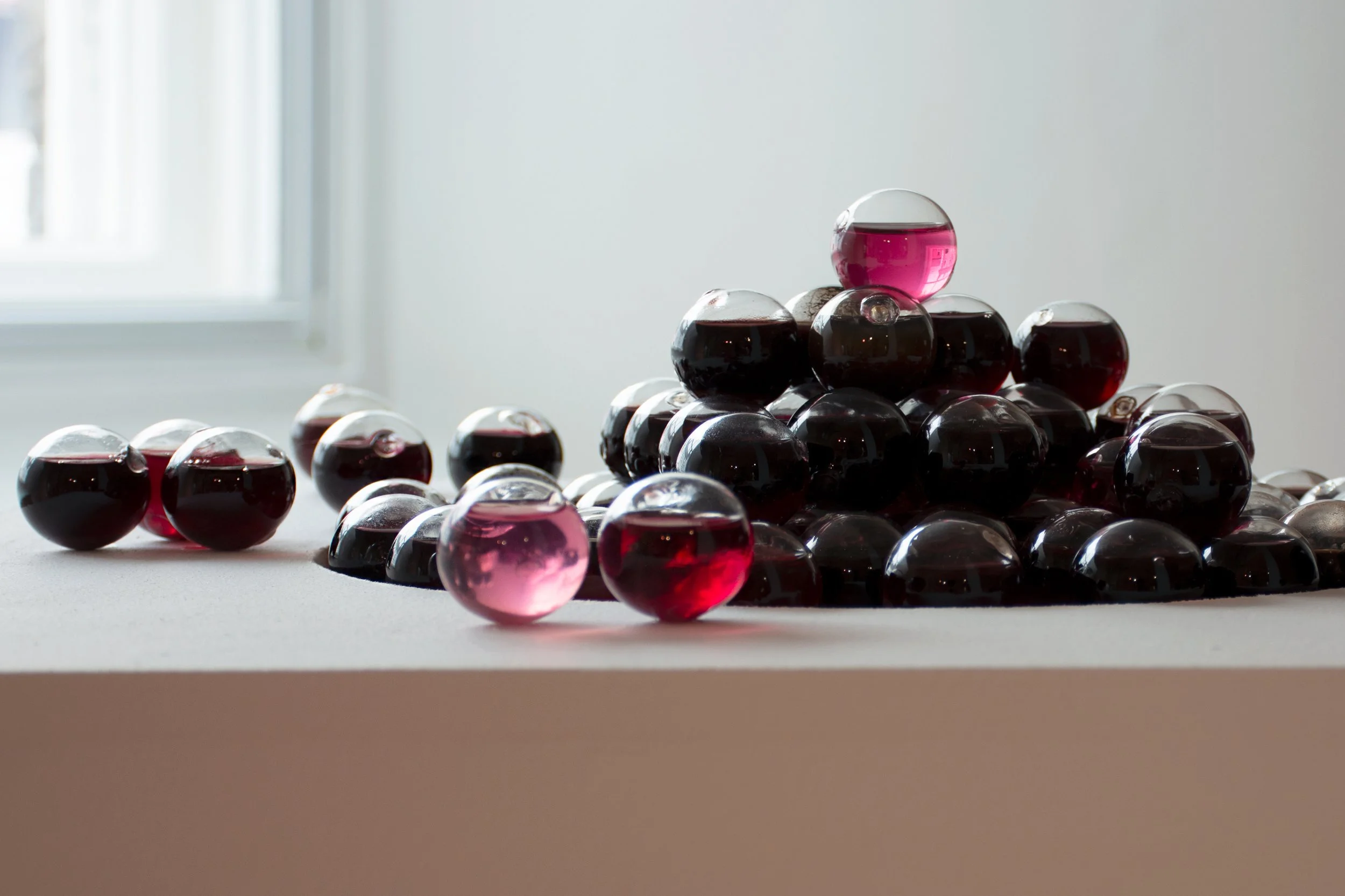
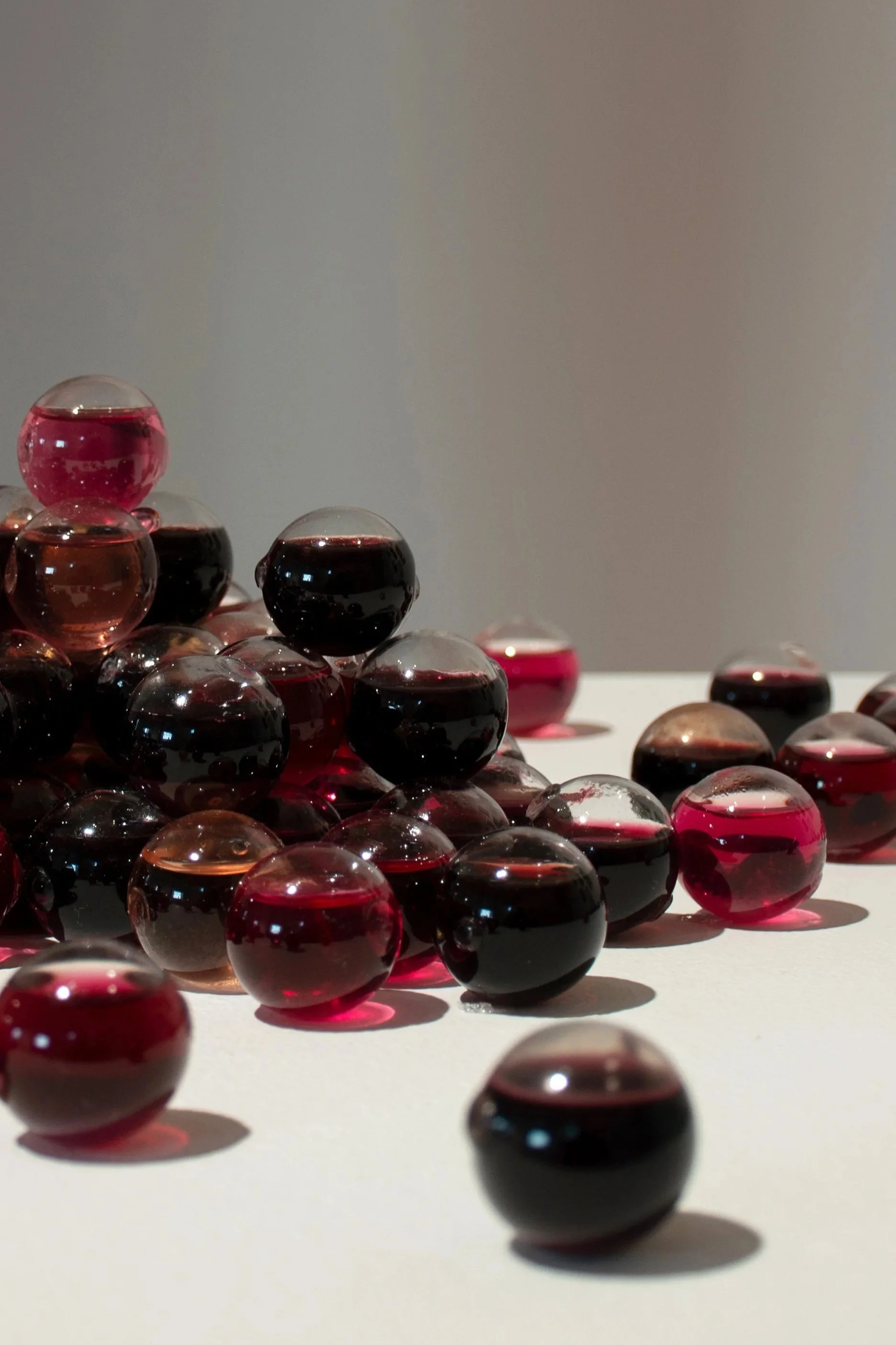
Artist’s blood, distilled water, hollow glass spheres (30 mm ⌀), and resin, 2023.
Self-Extended consists of hundreds of sealed, hollow glass spheres, each containing varying amounts of the artist’s blood (collected periodically over two years with the assistance of a medical professional) and distilled water.
This work challenges the rational, physical limitations of the self by treating the body’s components as a medium, much like any other material. Blood, with its capacity to carry an array of emotional and physical states, becomes central to this exploration. In Self-Extended, this bodily element is preserved in a state of stasis, expanding the concept of physical boundaries through space and time.
The glass spheres act as vessels, incubating versions of the artist and allowing these fragmented selves to co-exist simultaneously.
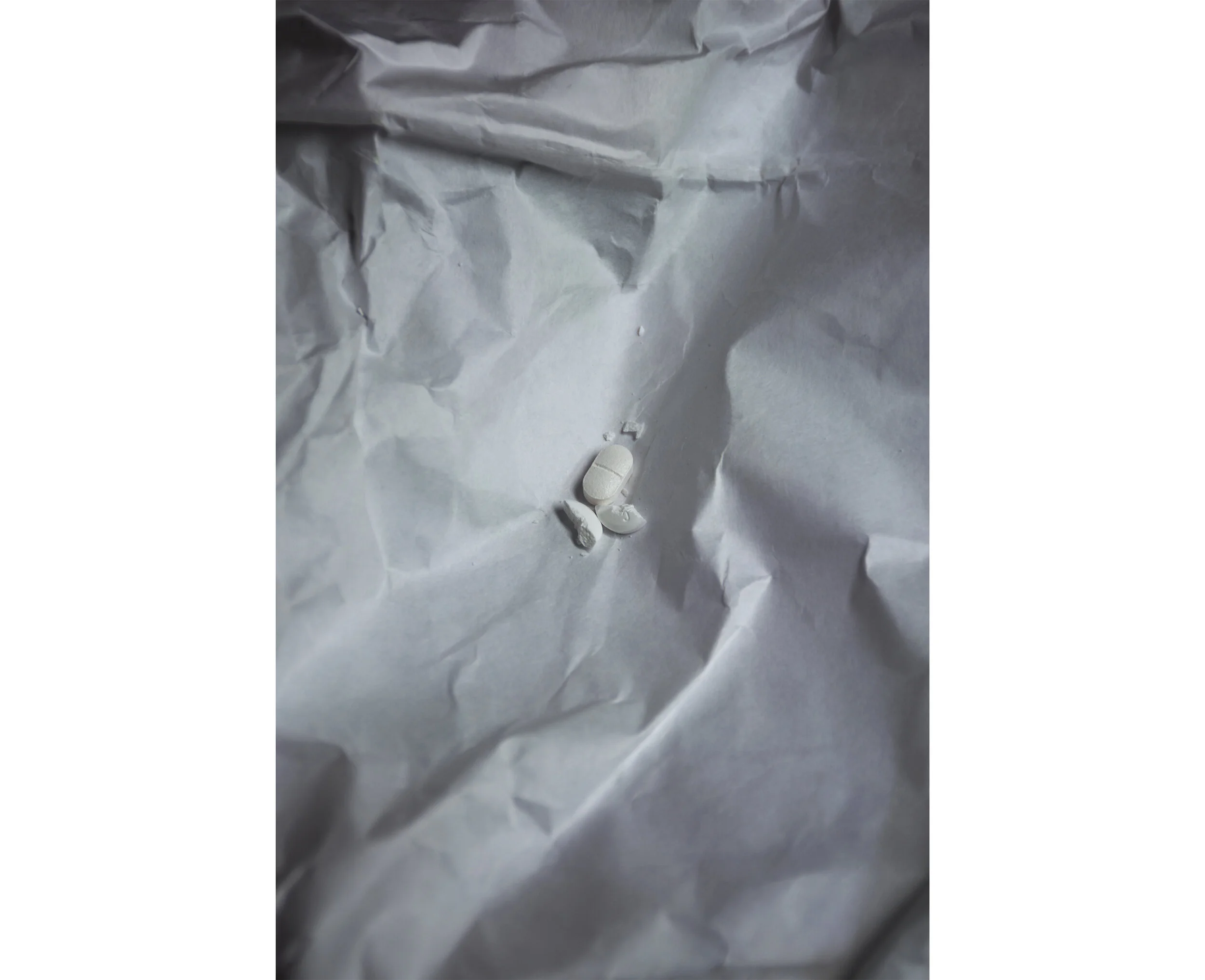
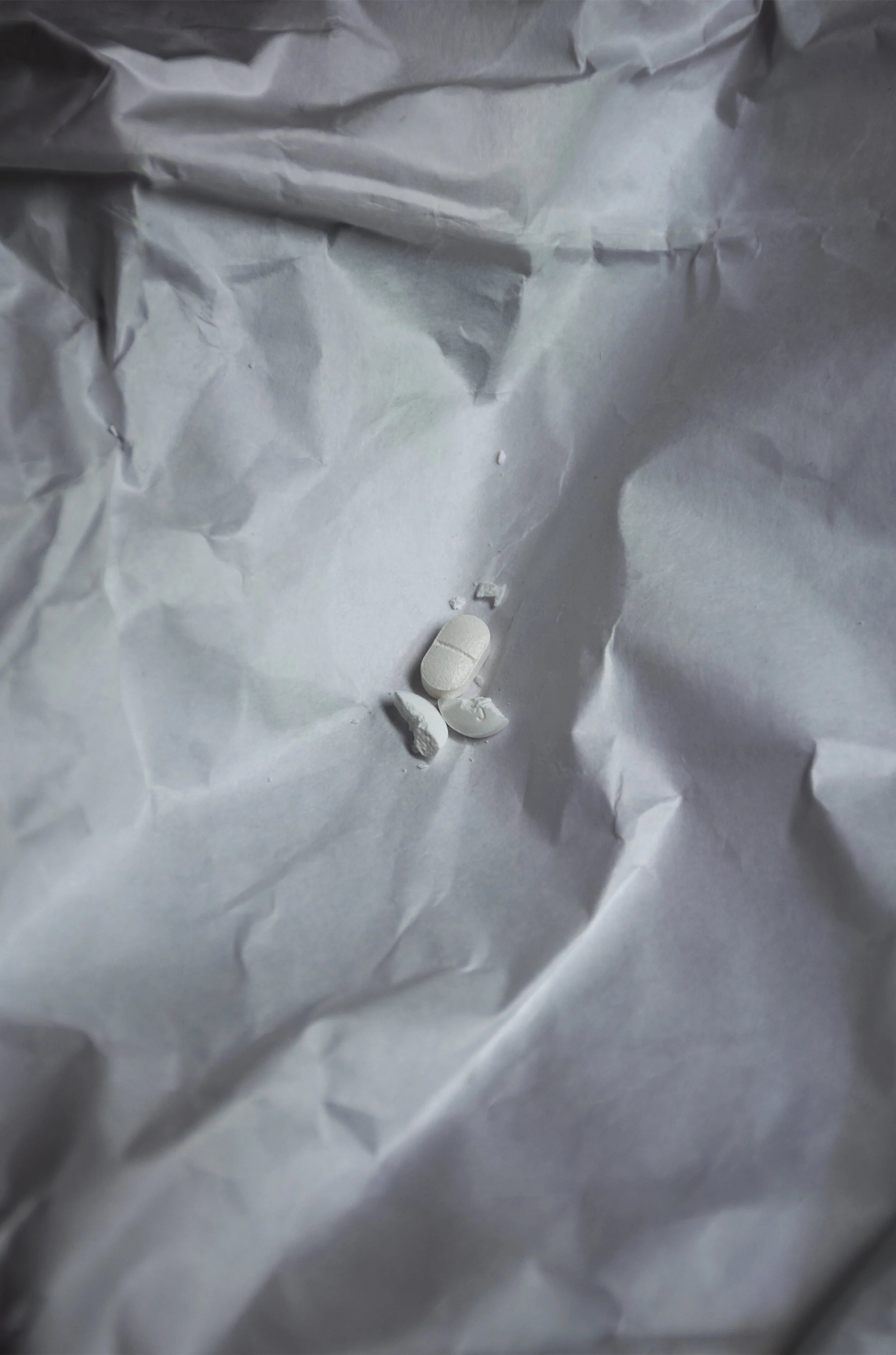
29.7 × 42 cm, Giclée print on Hahnemühle paper. 2023.
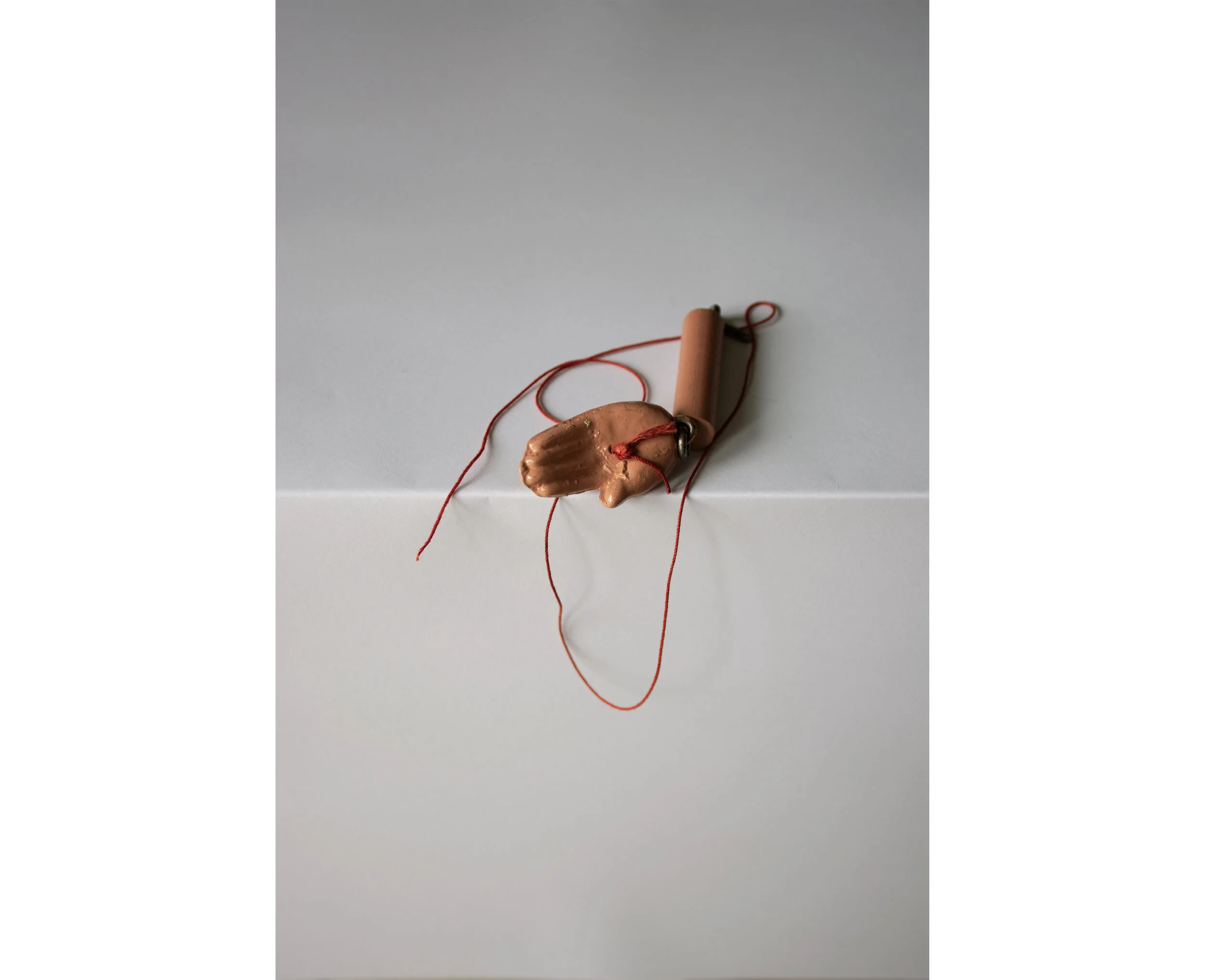
As part of a Catholic upbringing, Sundays began with morning mass, the house was decorated with religious iconography, and the concept of the ‘soul’ was introduced positively from an early age.
Philosopher René Descartes believed that the ‘soul’ has a palpable resting place in the pineal gland, located at the centre of the brain. Through this locus, the ‘soul’ intermingles with the physical self, exerting its influence over the body through the internally flowing animal spirits.
The concept of Animal Spirits carries Catholic undertones, later expanded upon Descartes’ beliefs, who posited that the ‘soul’ is dominant over the body and that the ‘self’ consists of two separate yet intimately connected entities.
When the notions of the ‘self’ are examined and rationalised, the definition of the ‘self’ and whether true control can even be exerted over it can feel uncertain. This series explores how such uncertainties and uneasy thoughts can be navigated through tangible means.
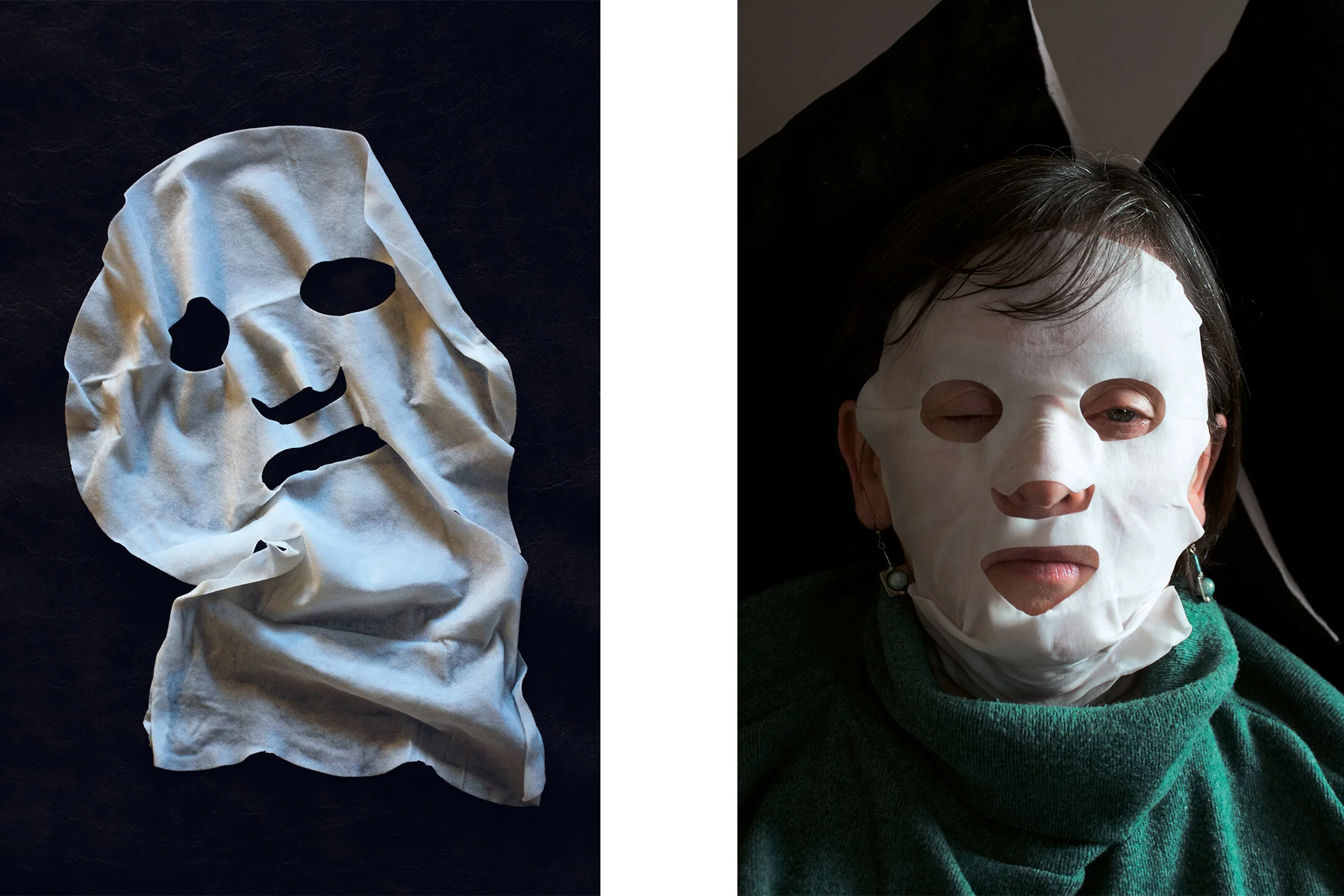
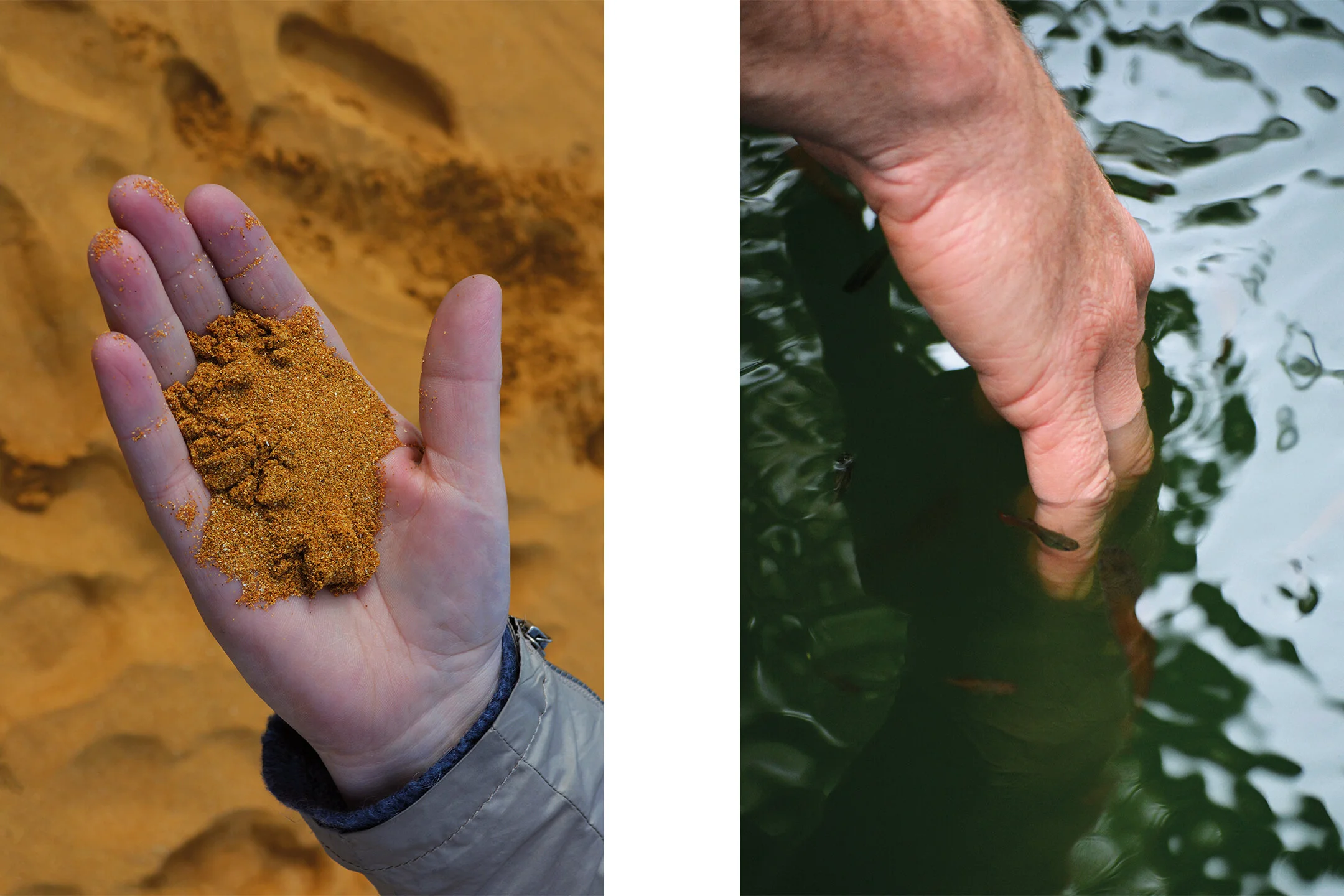
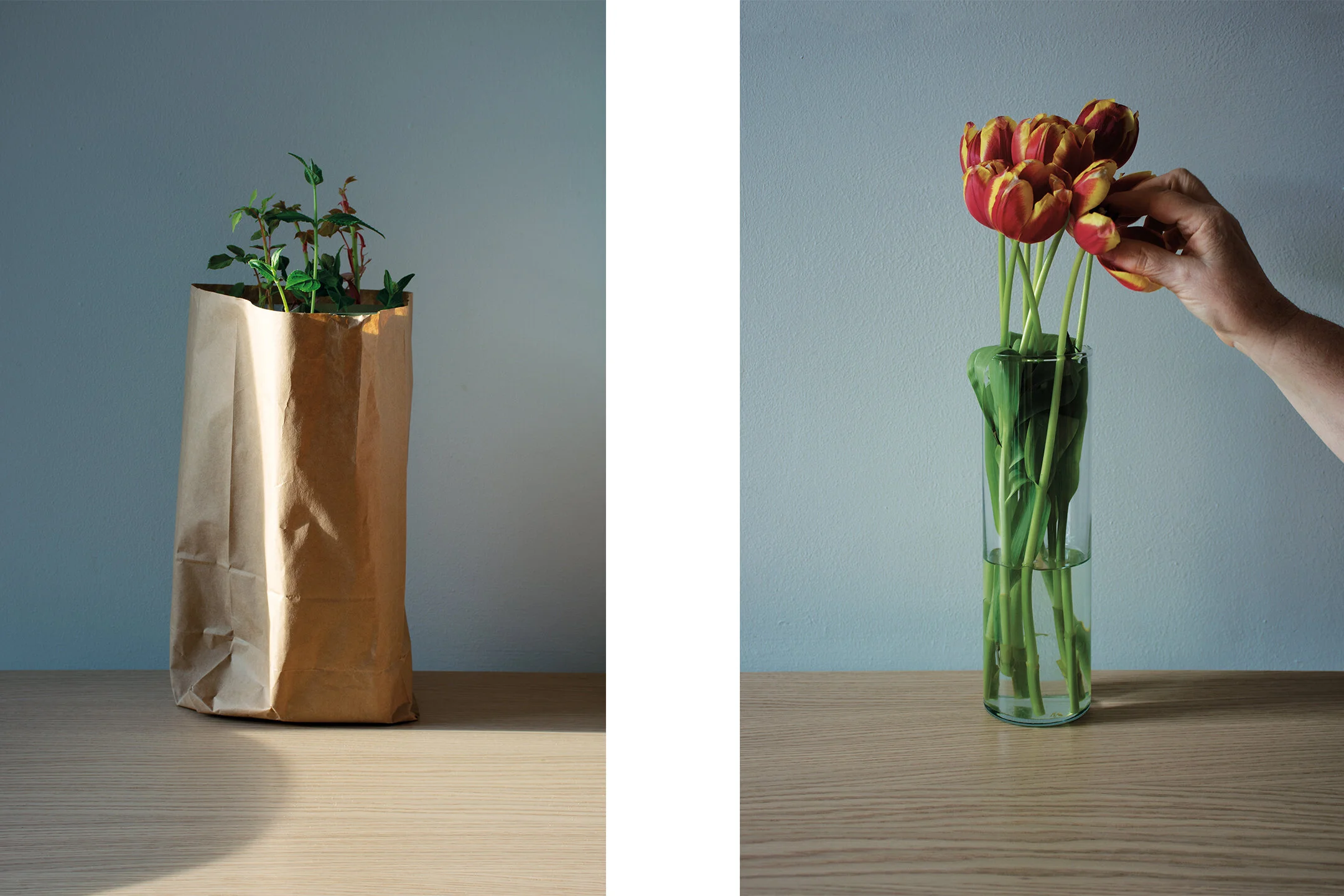
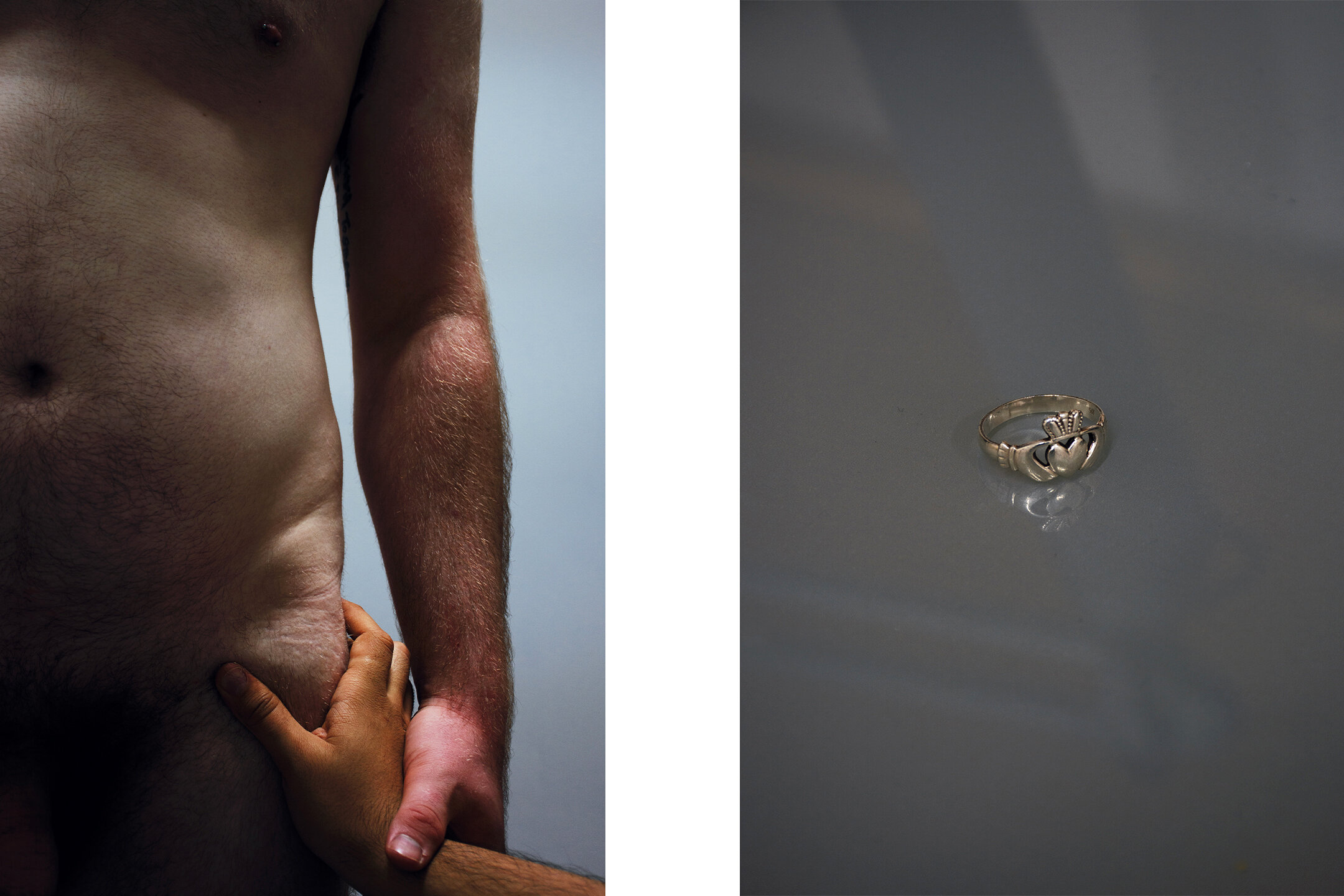
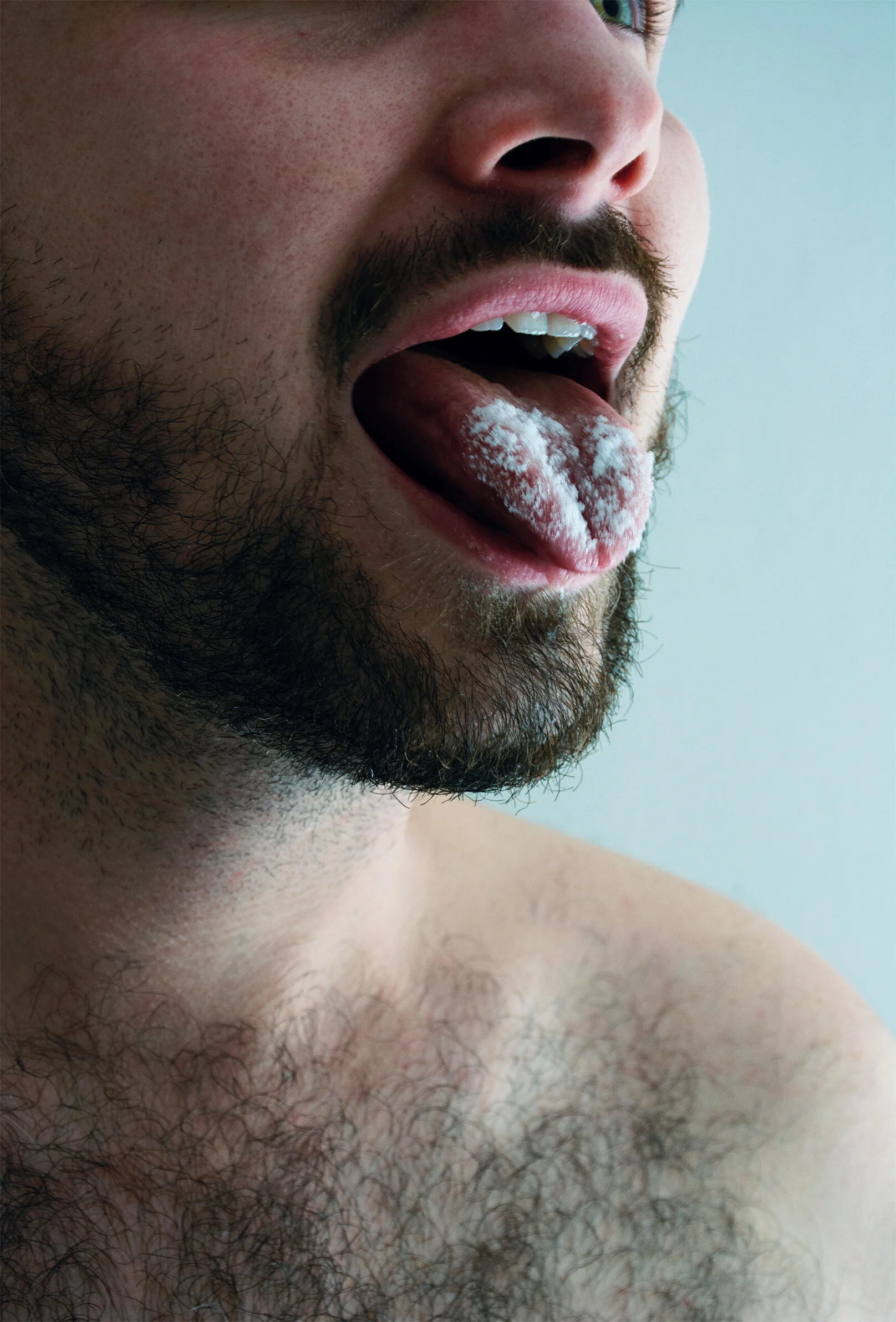
Per image: 59 x 84cm, Giclée print on Hahnemühle paper, 2020.
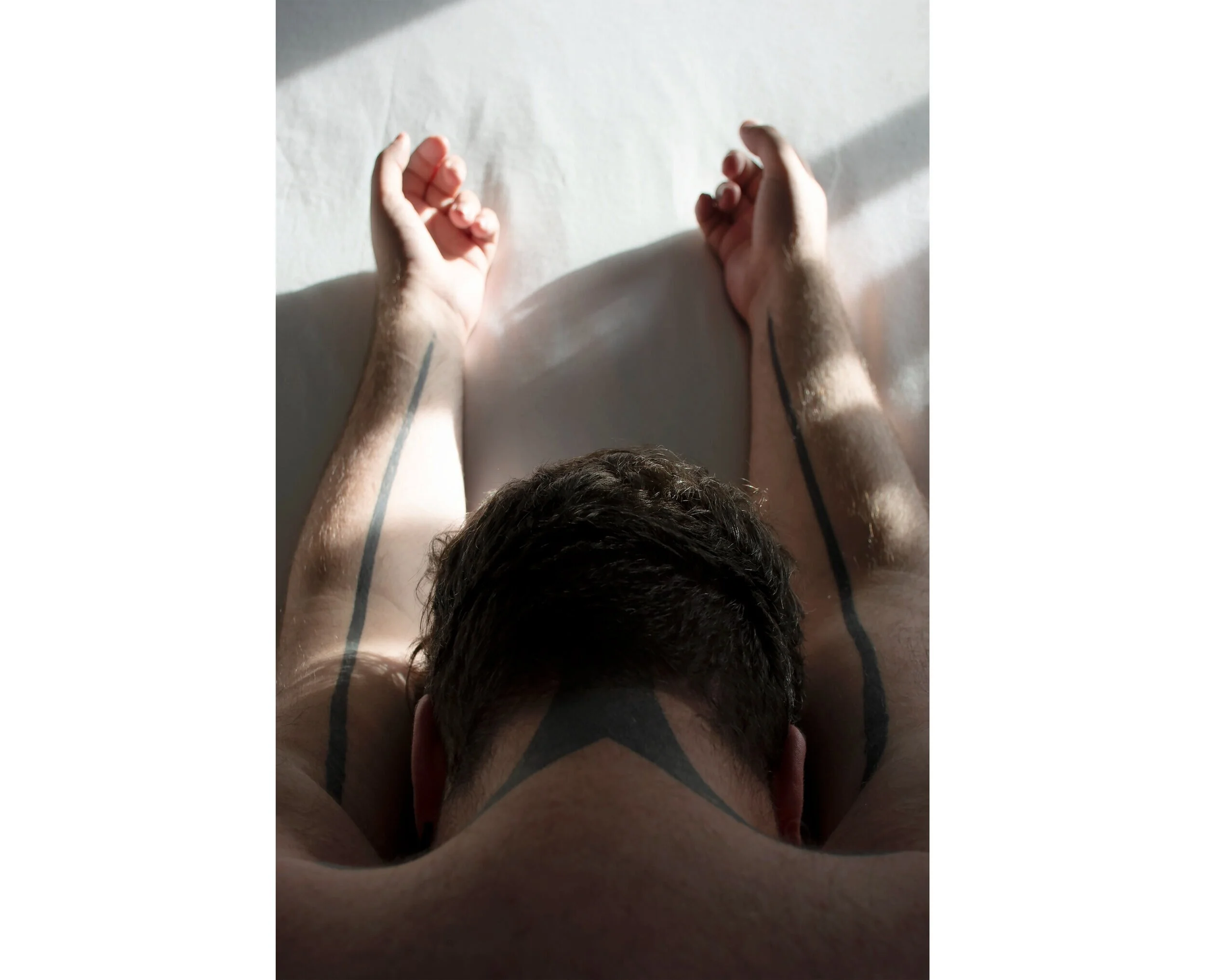
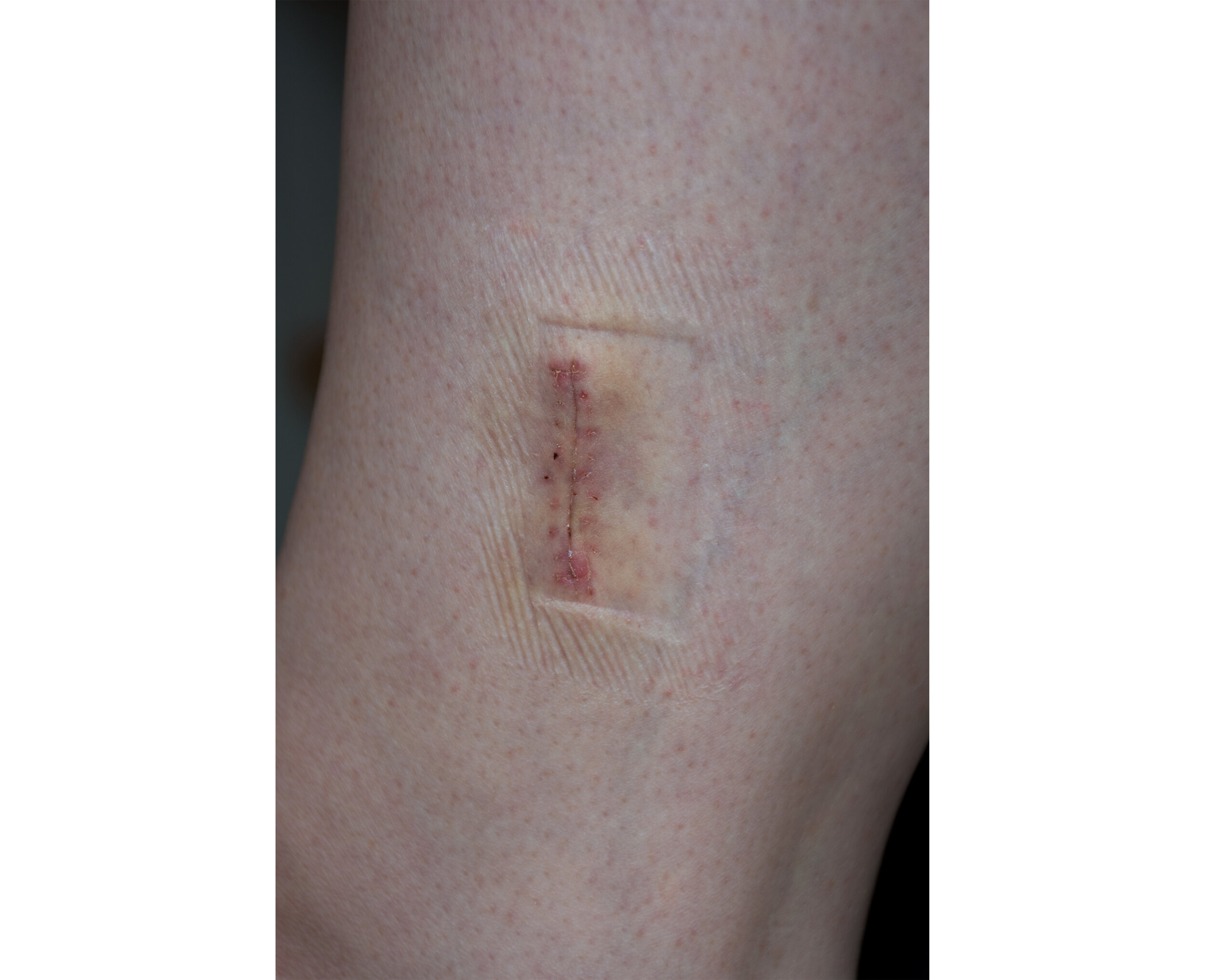
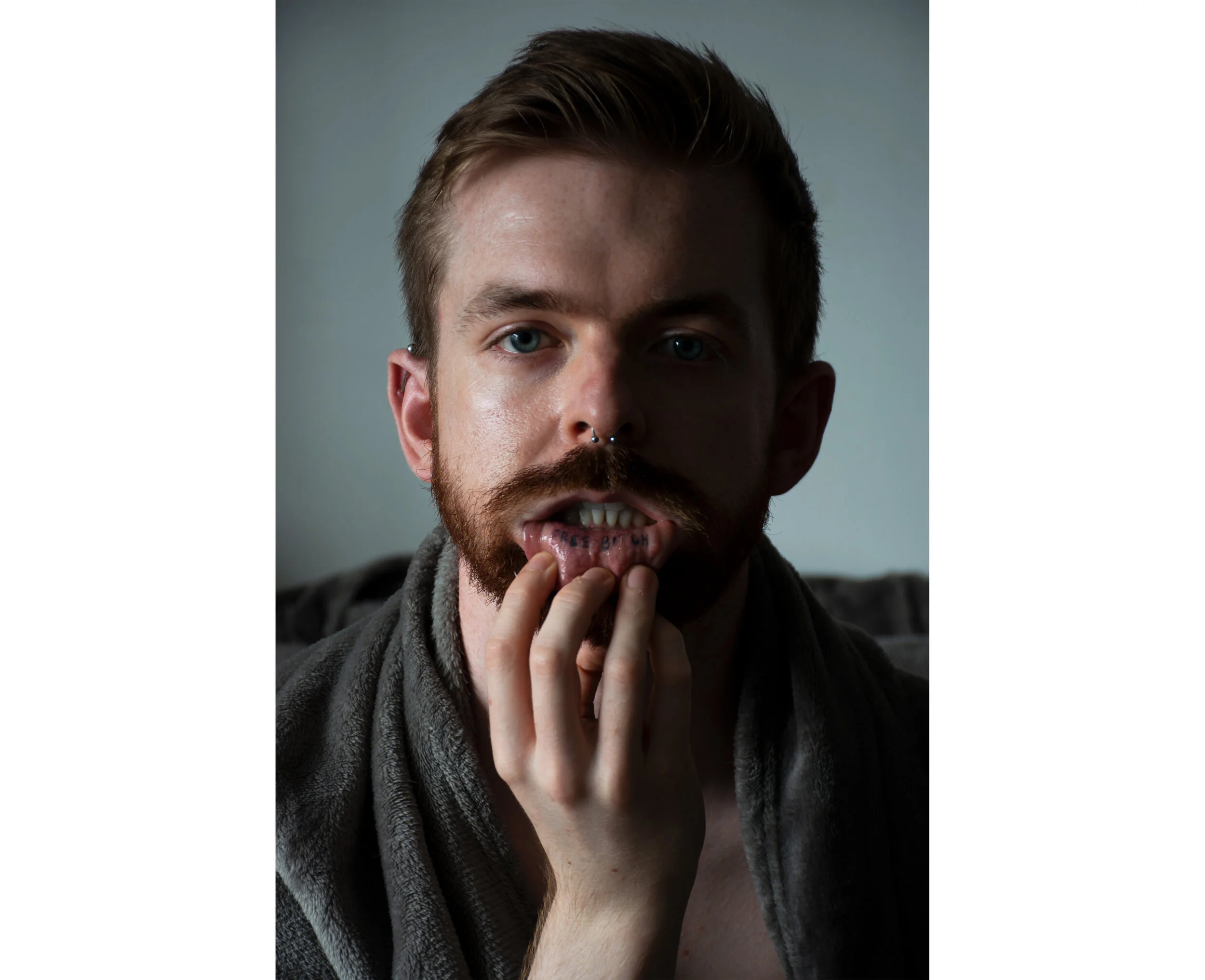
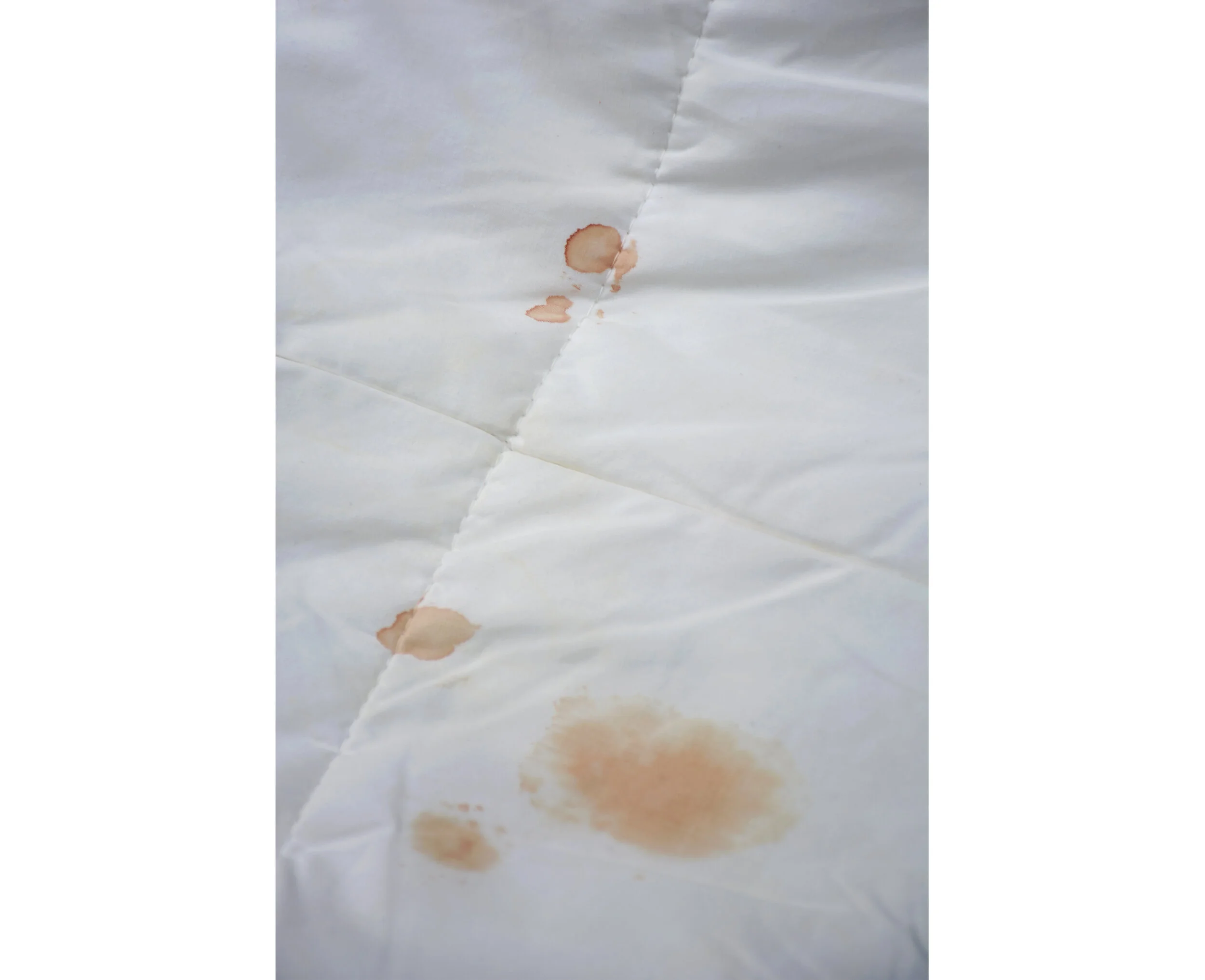
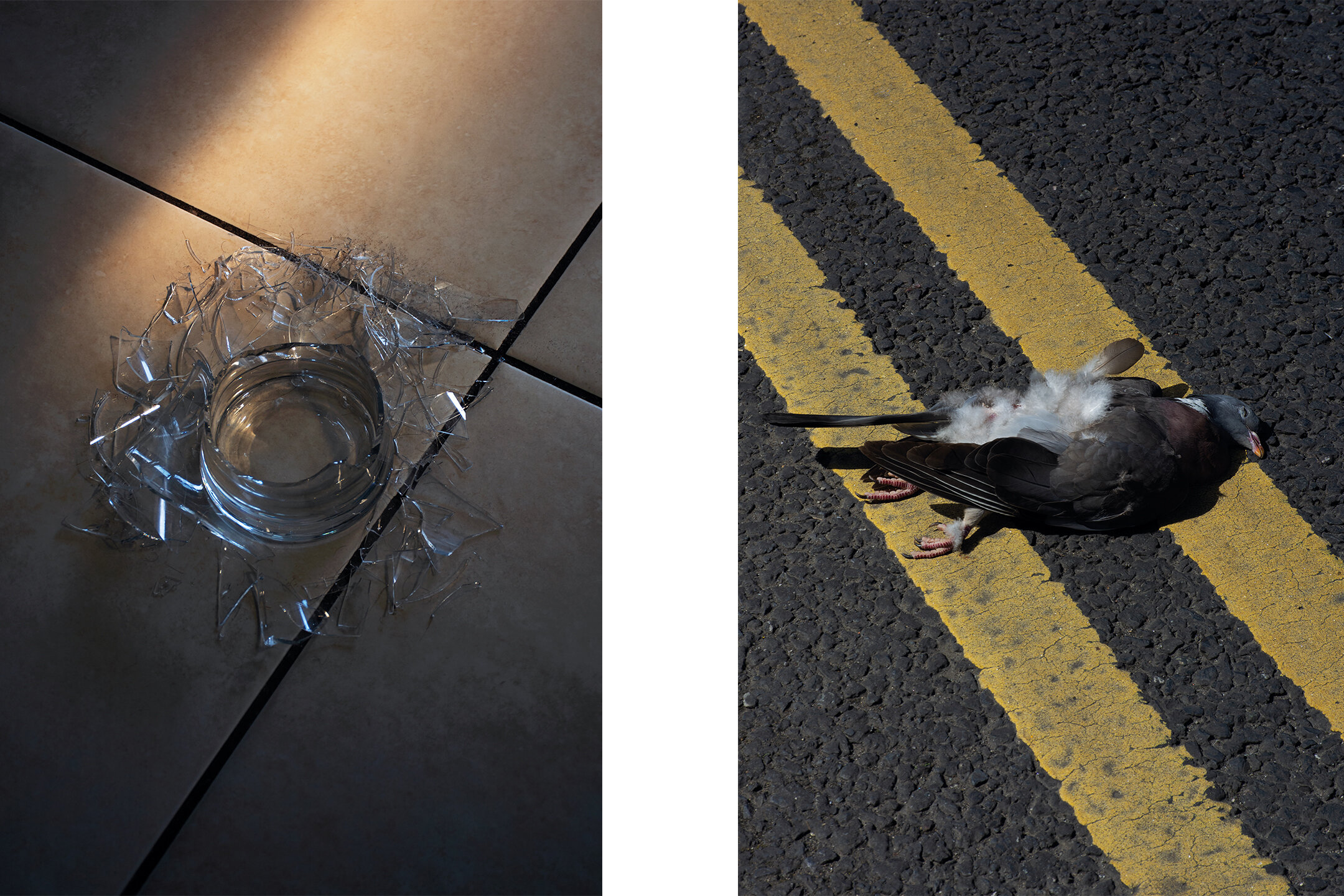
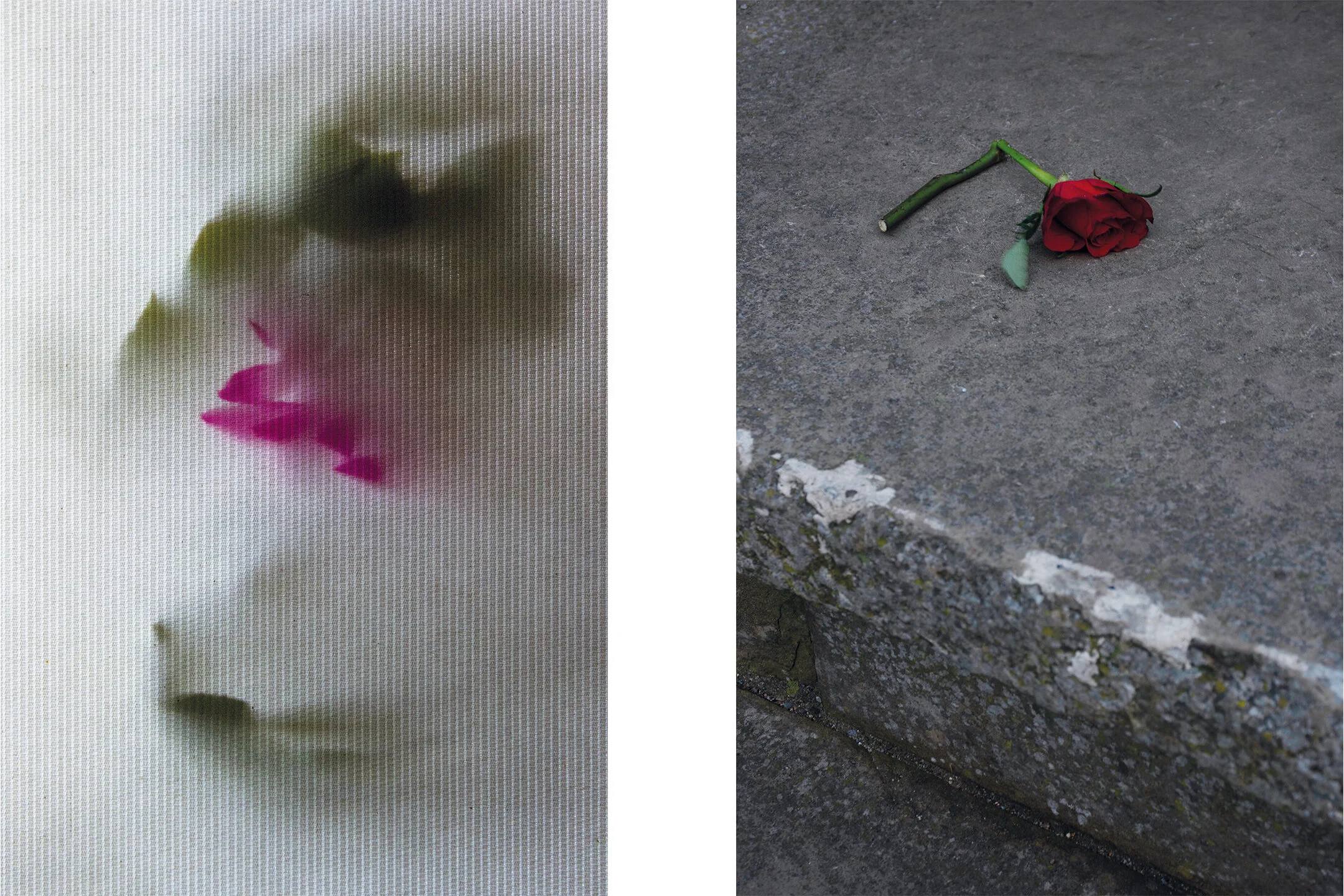
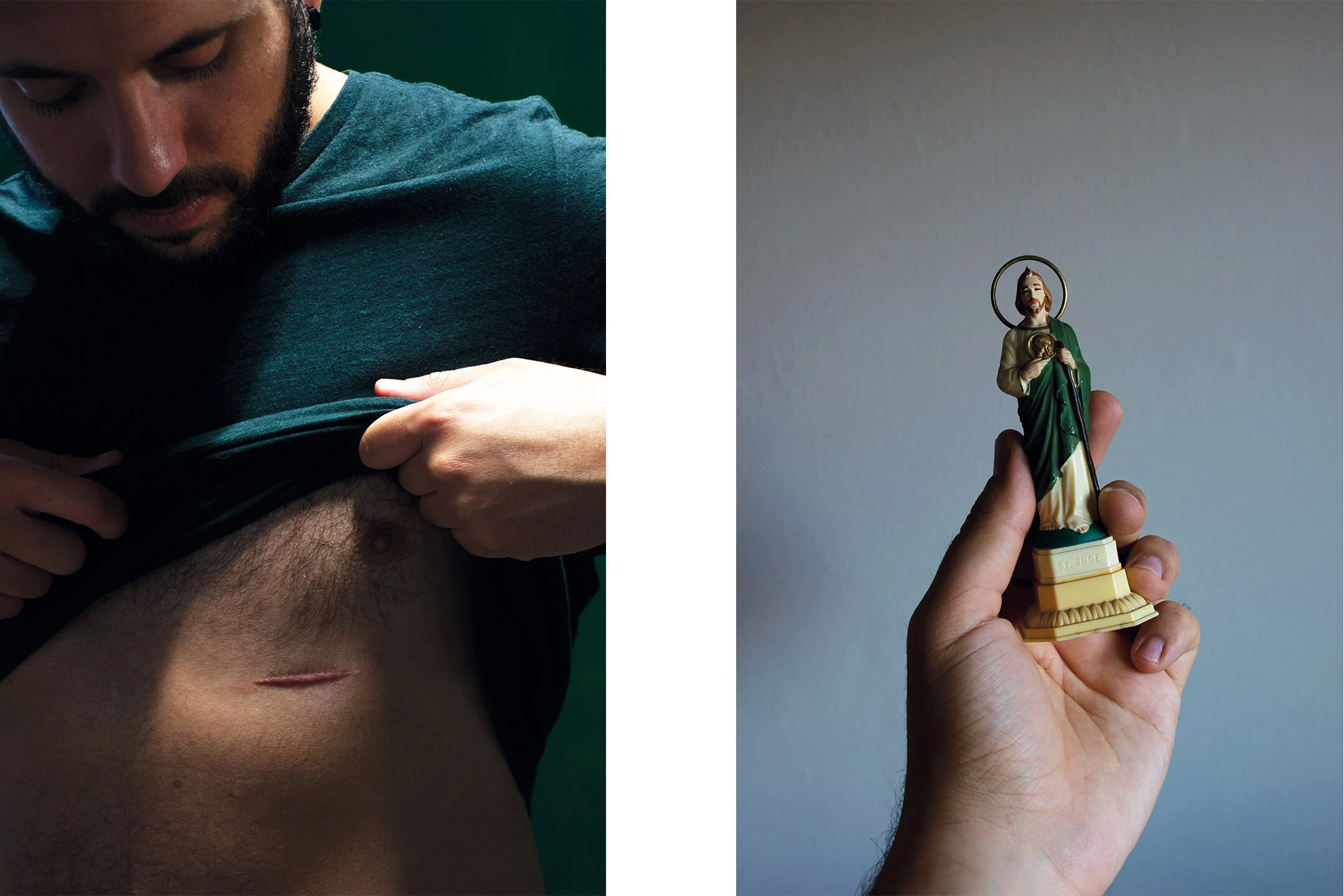
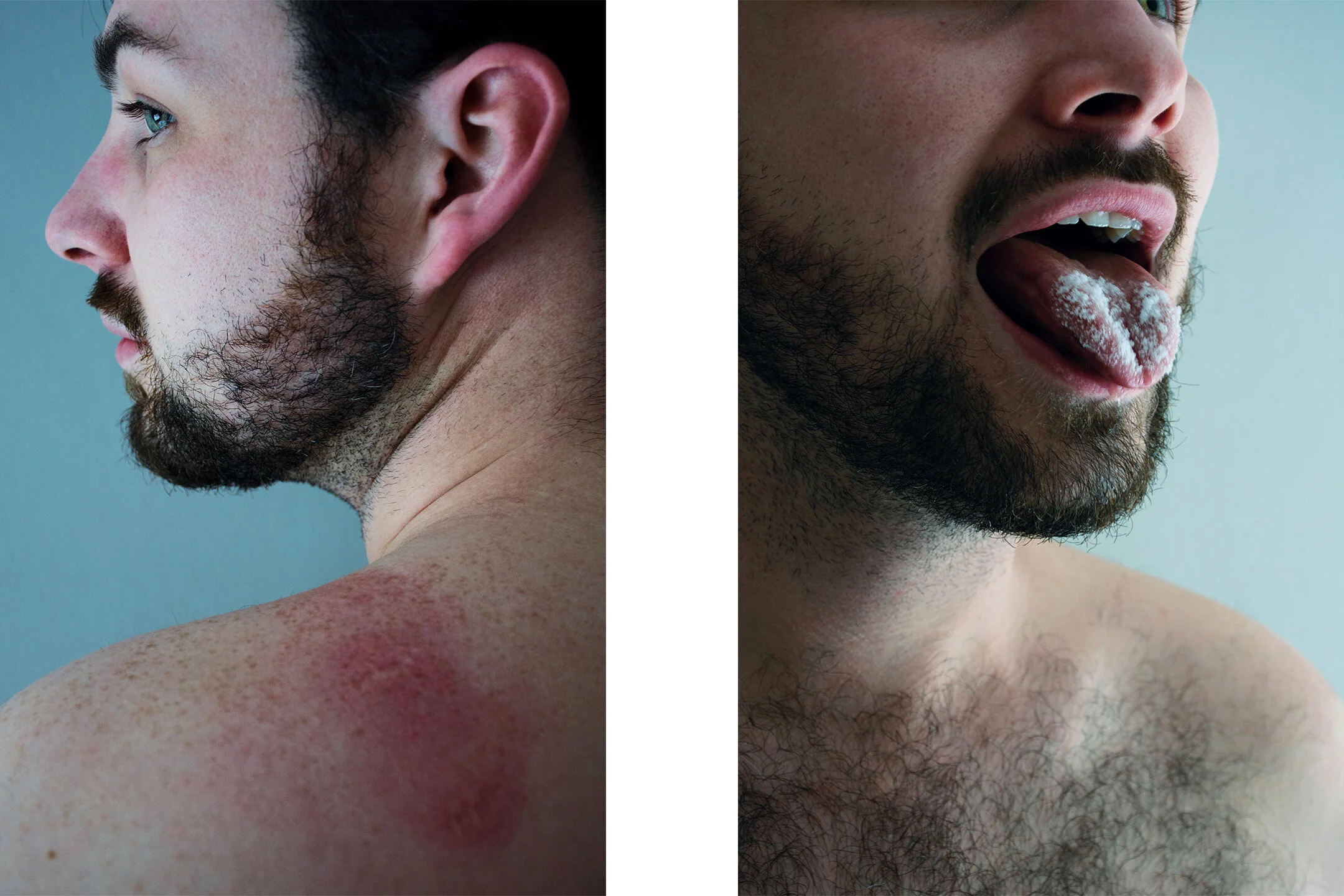
BitterSweet on the Tongue was developed over the course of a year, capturing people, objects, plants, and animals within intimate and familiar environments. The series emerged from an attempt to visualise a sense of longing for something lost, or something close yet out of reach, while holding onto connections in order to prevent them from disappearing.
Unified by a shared emotional undertone, the sixteen images were later paired into eight diptychs, expanding their narratives through both commonality and difference. Presence is a central component of the series, amplified through its larger-than-life scale, which encourages slowed engagement and confrontation rather than passive viewing. This confrontation is not intended to be negative, but instead acts as an opening into the vulnerability, intimacy, and honesty that the works examine.
The pairings within the series create space for ambiguity, allowing viewers’ personal experiences to shape their interpretations and further evolve the narrative. Through this openness, BitterSweet on the Tongue moves beyond its personal origins into a space of shared resonance and relatability.